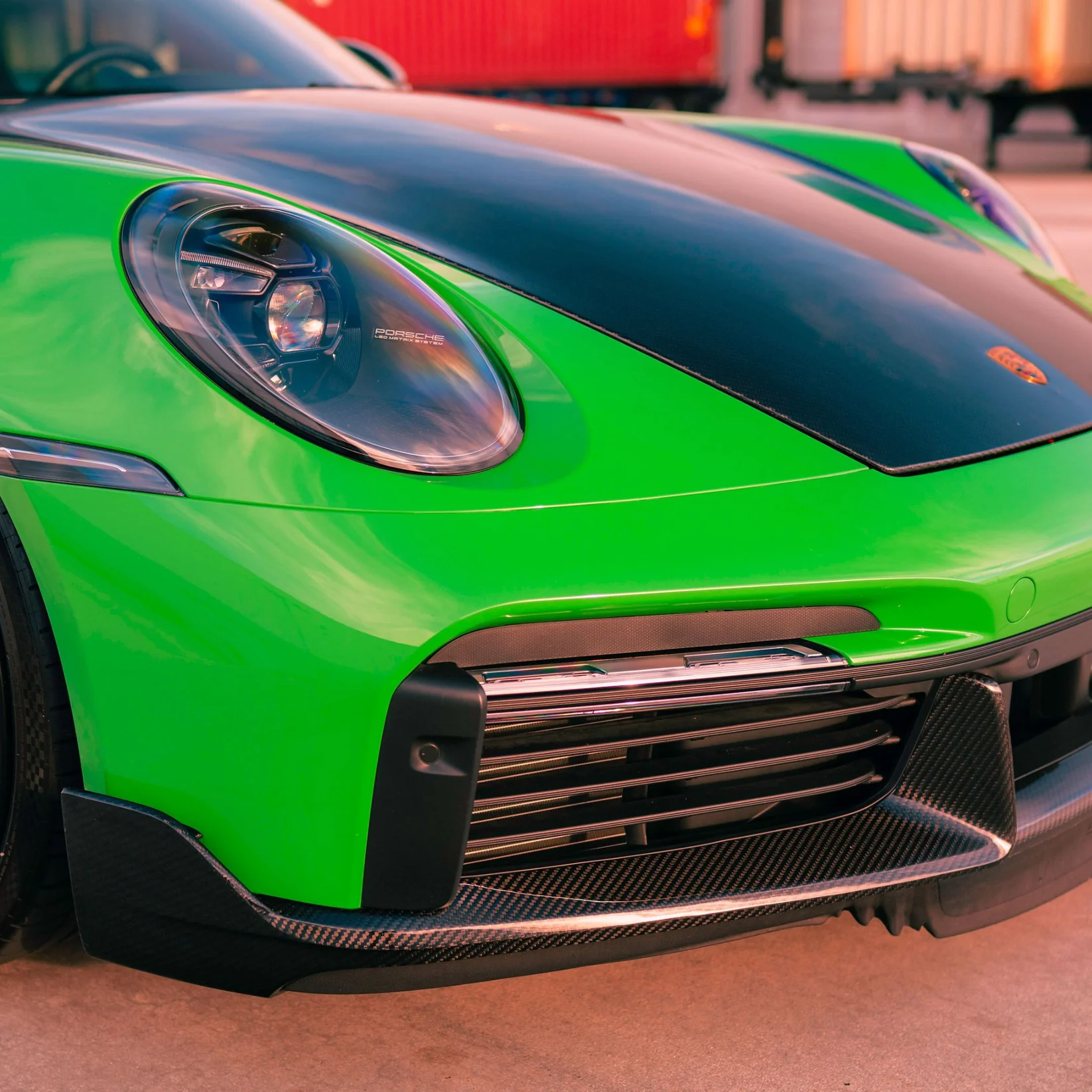
For the true Porsche collector, every drive is a balancing act between the thrill of the open road and the relentless anxiety of depreciation. You bought your Porsche 911 to be driven. Yet, every loose gravel road, stray track pebble, and high-velocity road debris threatens the pristine factory paint and immaculate plastic trims that safeguard your car’s future resale value or Pre-Purchase Inspection (PPI) pedigree. We have all experienced this to one degree or another, right?
Historically, owners believed that preserving a car meant keeping it entirely bone-stock, locked away under a car cover. But a new philosophy has taken over high-end garages: preservation through modification.
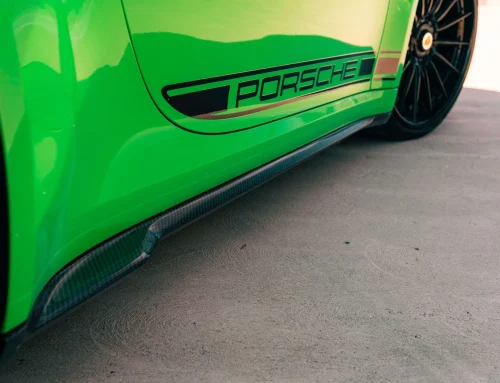
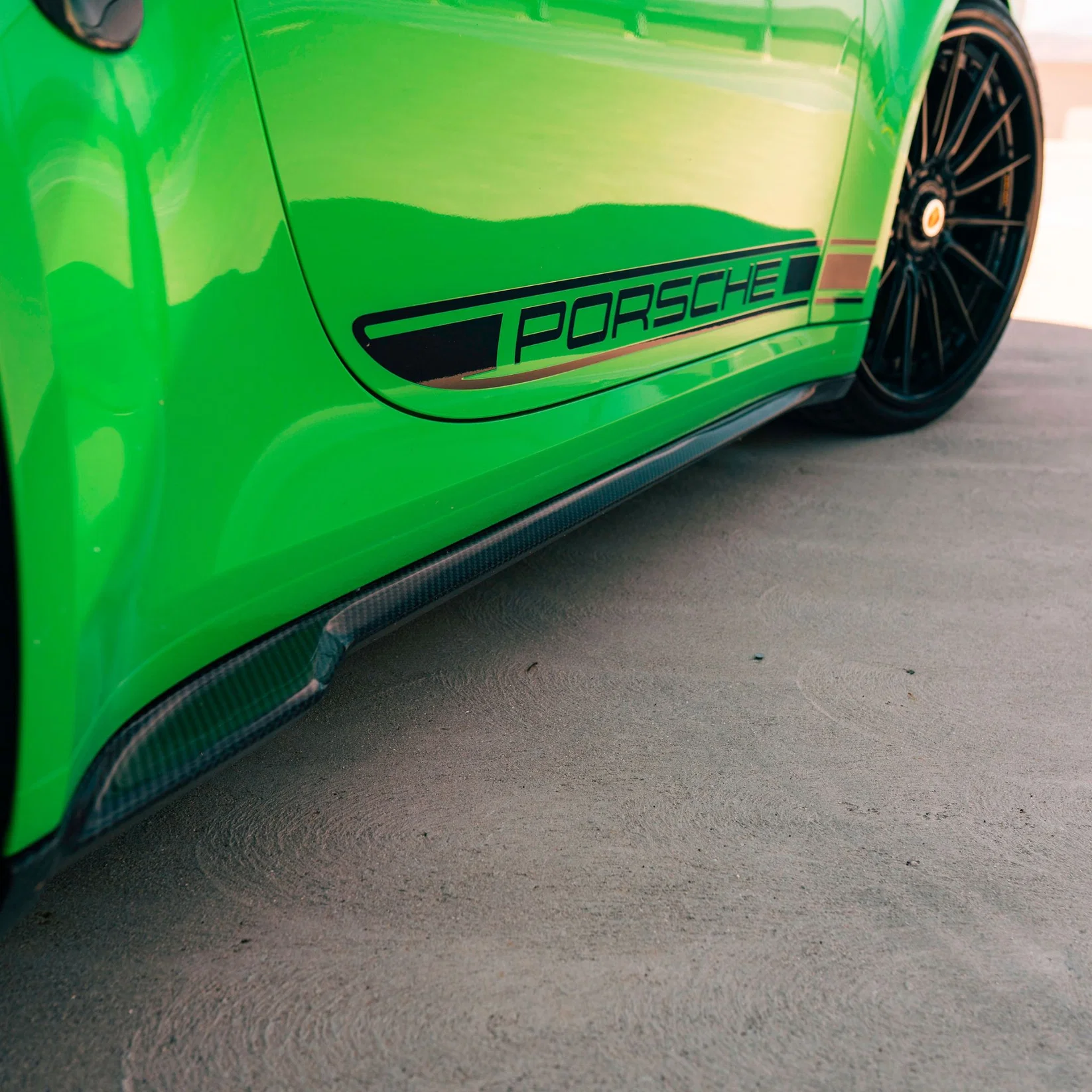
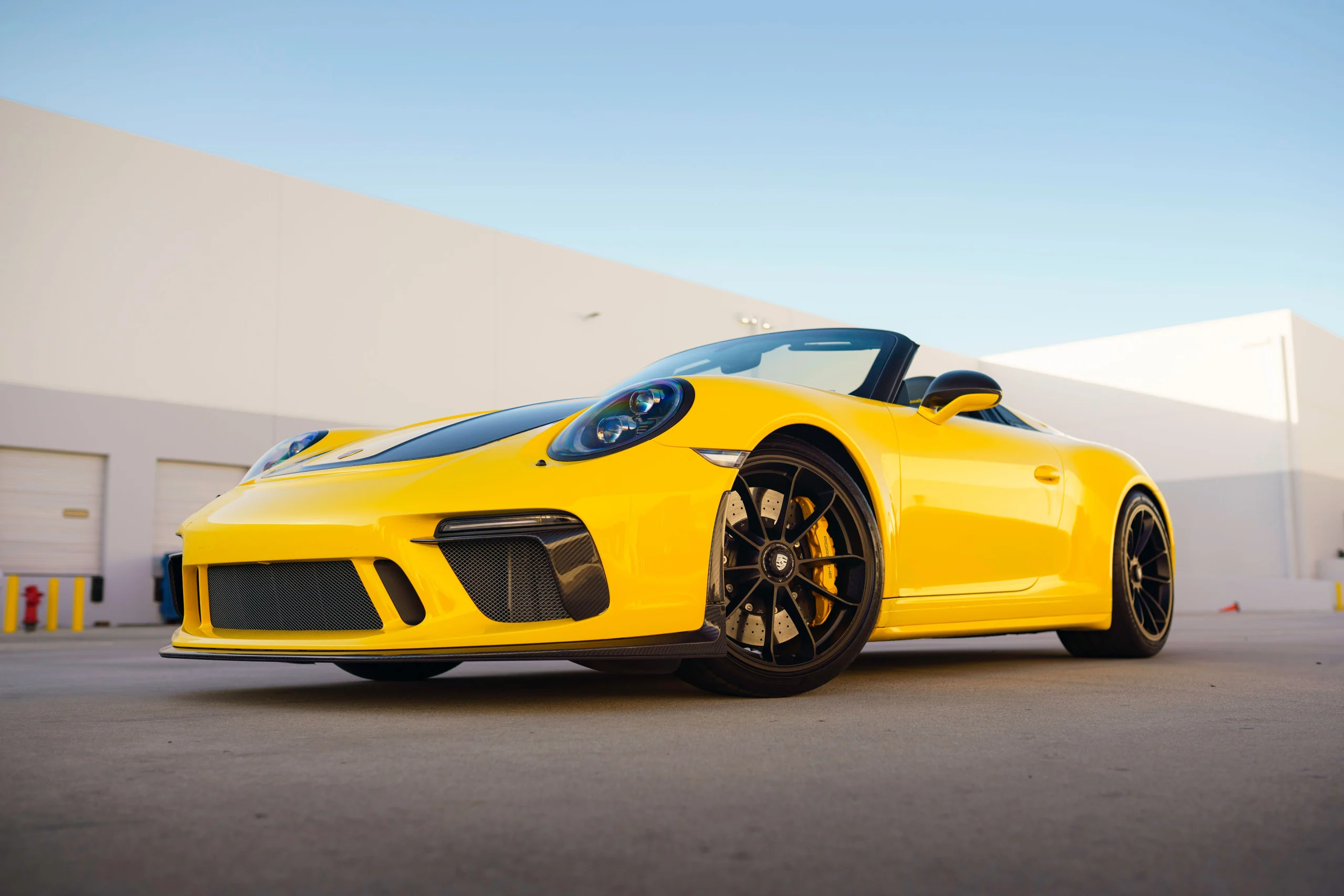
By strategically swapping vulnerable factory components with premium, precision-engineered dry carbon fiber accessories, you aren’t just elevating your 911’s aggressive aesthetic – you are actively shielding the original, serialized parts from real-world wear and tear.
The secret to executing this strategy successfully lies in absolute reversibility. Here is how to completely transform your modern 911 (991.2 or 992.1) while maintaining a bulletproof path back to factory-stock OE perfection.
The Philosophy of Reversible Porsche 911 Modifications
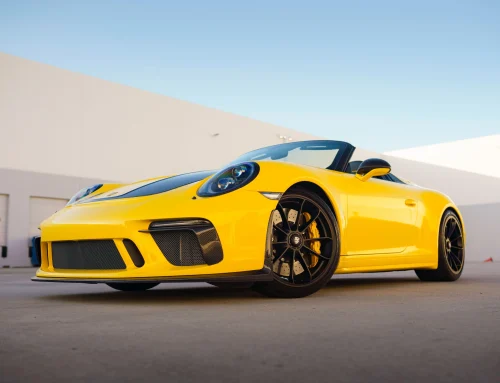
When modifying a high-value asset like a 911 GT3, Turbo S, or a rare Speedster, the golden rule is simple: Never cut, never drill, and never splice.
Reversible modifications rely on bolt-on, bolt-off engineering. By utilizing the exact factory mounting points, clips, and hardware that Porsche designed in Stuttgart, high-end aftermarket components can seamlessly step into place.
| Phase 1 | Factory Components | Carefully Removed & Stored Safely |
| Phase 2 | OG Dry Carbon Parts | Dropped Directly Into Factory Mounts (Zero Modding) |
| Phase 3 | Resale / Lease Return | One Afternoon Swap Back to 100% Bone-Stock |
This approach yields a powerful dual benefit:
- Active Protection: Your original plastic valances, mirror caps, and stone guards remain tucked away safely in climate-controlled storage, safe from rock chips, UV damage, and driveway scrapes.
- Zero-Friction Reversion: If you decide to sell the vehicle, trade it in, or return a leased car, the entire package can be unbolted in a single afternoon. The pristine, untouched factory parts go back on, and your car commands top-tier stock market value.
Why Dry Carbon Fiber is the Collector’s Shield
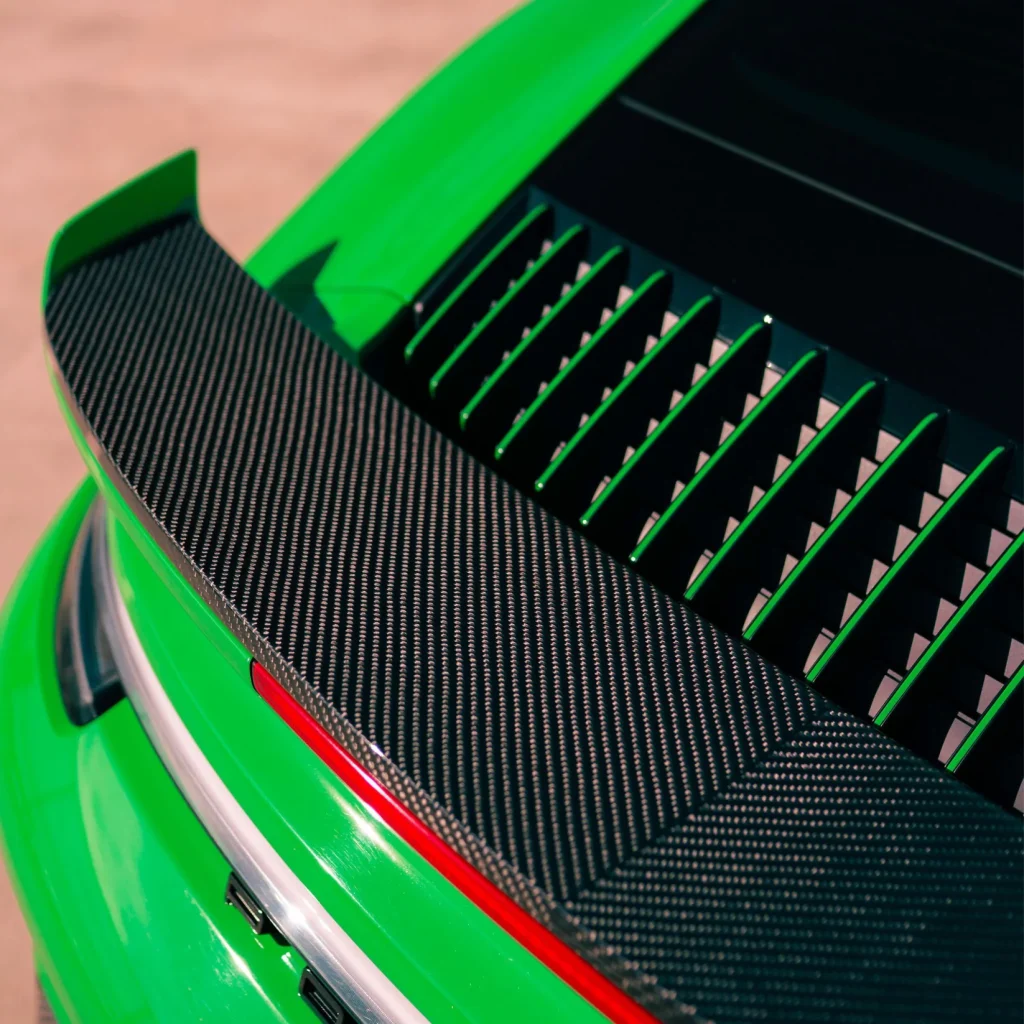
Not all carbon fiber is created equal. To successfully execute a preservation strategy, understanding the technical difference between wet carbon and dry pre-preg carbon fiber is essential.
| Attribute | Wet Carbon Fiber (Lower Tier) | Dry Pre-Preg Carbon Fiber (Aerospace Grade) |
| Manufacturing | Hand-laid fabric resin, air-dried | Resin-impregnated weave, cured under pressure in an autoclave |
| Weight | Heavy due to pooled resin and fiberglass backing | Ultra-lightweight with optimal structural density |
| Precision & Fit | Thick, inconsistent edges; requires sanding/drilling | Laser-precise alignment; matches factory tolerances perfectly |
| UV Resistance | Highly prone to yellowing, hazing, and cracking | Immune to UV distortion and clouding under intense heat |
For a vehicle engineered to millimeter-level tolerances, wet carbon is a liability. Because it is thick and irregular, it forces installers to modify factory clips or drill new holes into adjacent body panels.
Conversely, dry pre-preg carbon fiber components mirror the exact edge thickness and backing tabs of your factory components. They snap directly into place without stressing surrounding bodywork. When you protect your car with dry carbon, you gain high-velocity durability without introducing irreversible modifications.
Key Exposure Zones: Where to Swap and Protect
To maximize both aesthetic impact and asset protection, focus your attention on the high-exposure impact zones of the 911 chassis.
1. The Front Fascia: Spoilers, Splitters, and Air Intakes
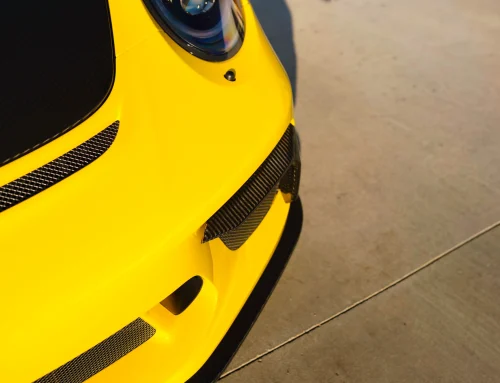
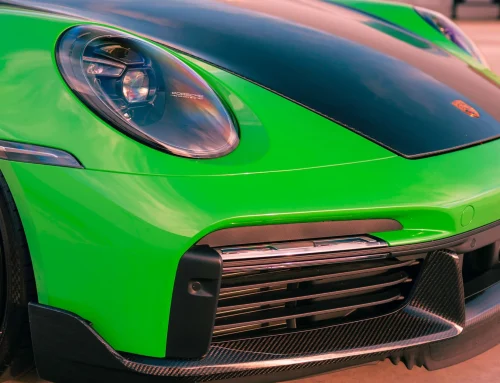
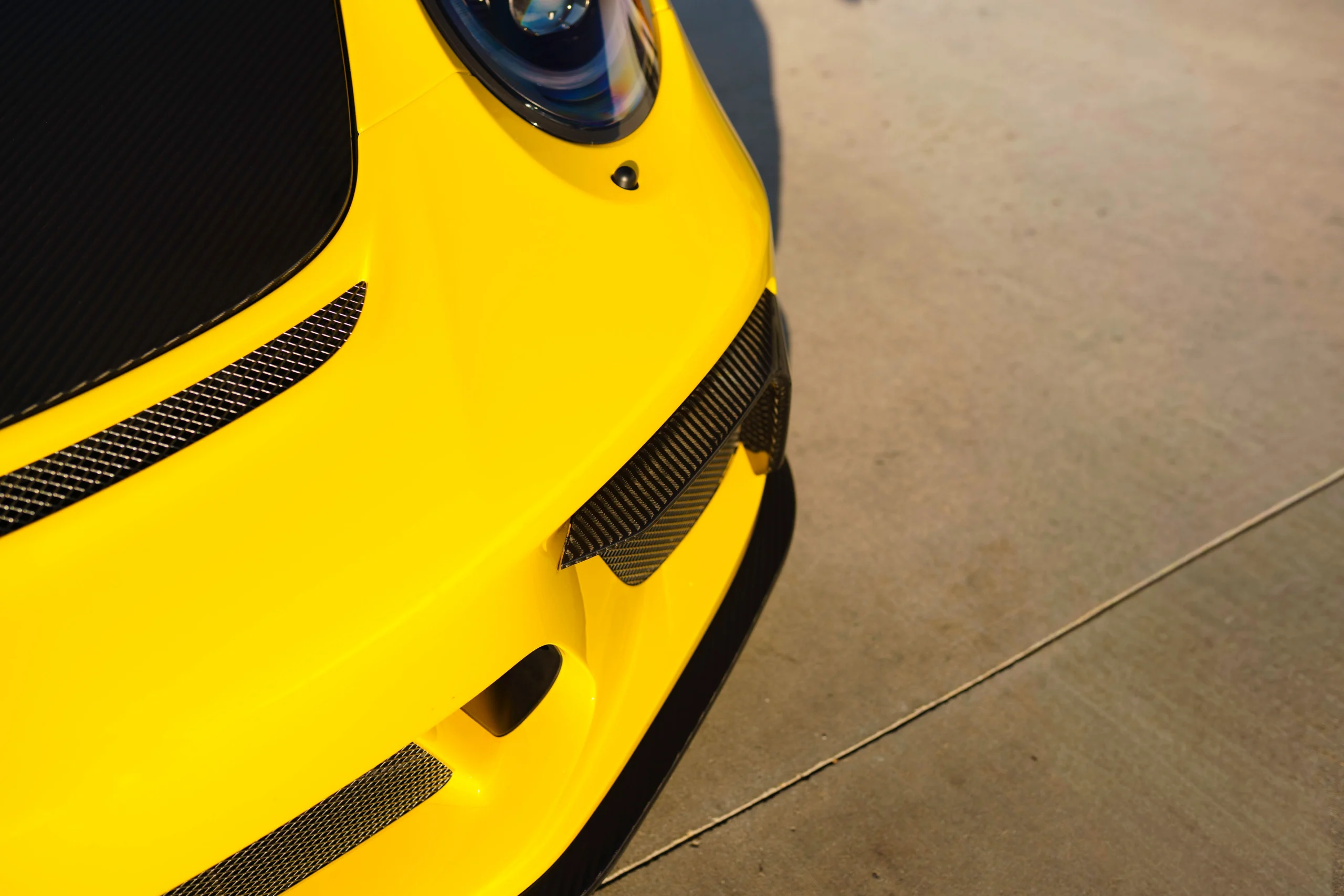
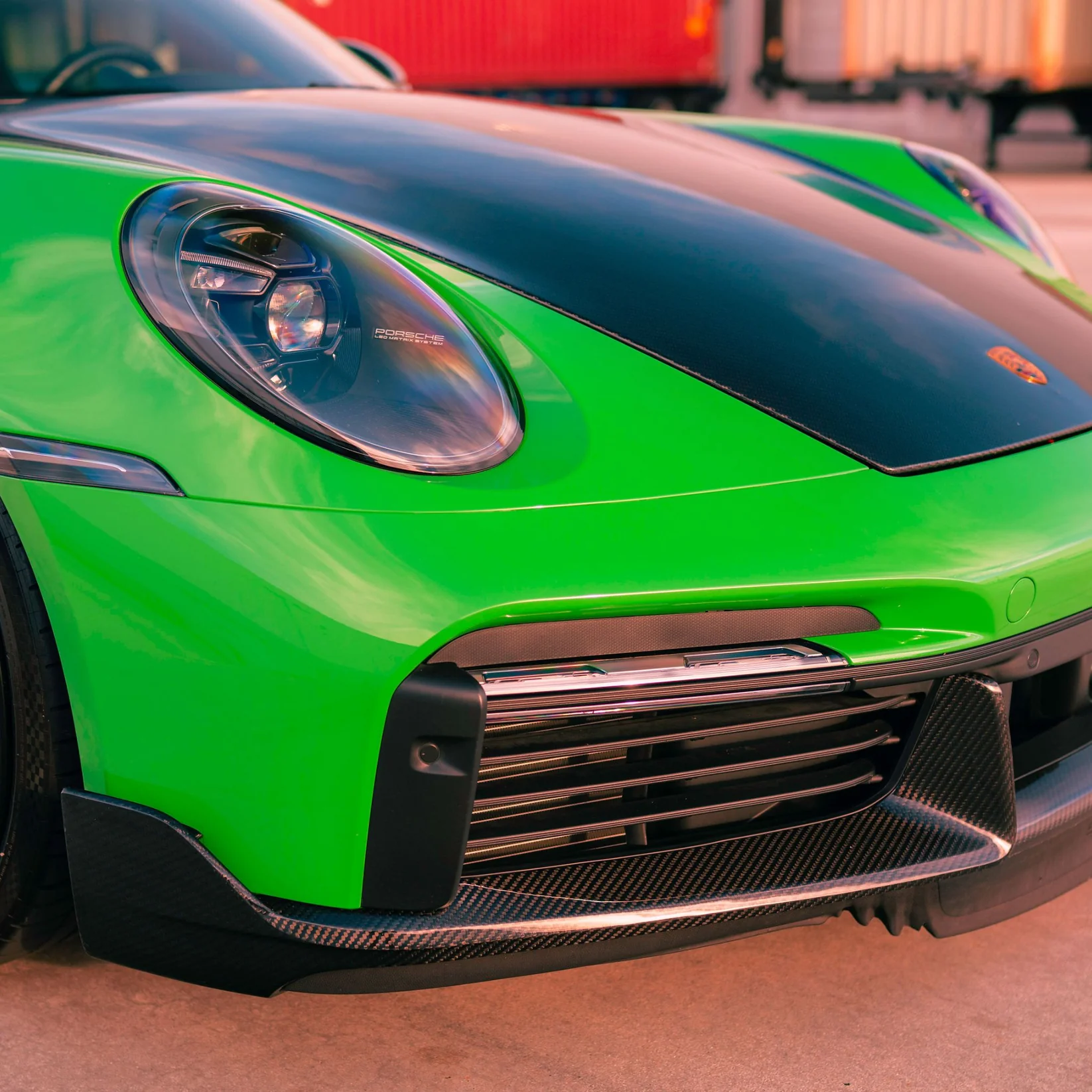
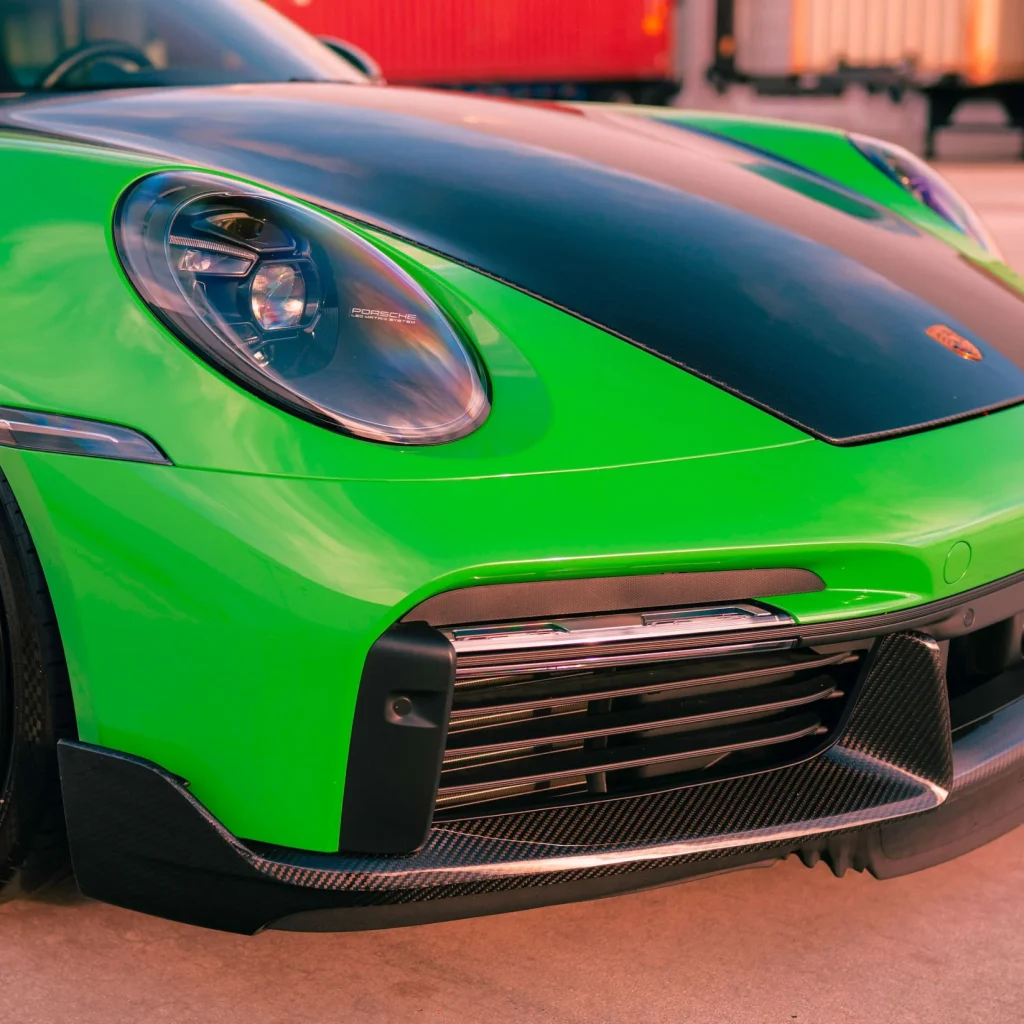
The low-slung nose of a 911 is an absolute magnet for road rash. The factory plastic front lip splitter and outer radiator intake surrounds take a brutal beating from highway sandblasting and sudden driveway inclines.
- The Swap: Replace the vulnerable lower front lip and plastic intake slats with dry carbon fiber equivalents.
- The Preservation: Because dry carbon features incredible tensile strength, it deflects rock impacts that would permanently gouge or crack factory textured plastics. If a massive dip severely scrapes the underside of your dry carbon splitter, your original factory piece remains completely unharmed in your garage.
2. The Mirror Profiles: Mirror Caps and Housings
Positioned at the widest point of the vehicle’s upper body, mirror caps face a constant barrage of bugs, flying stones, and tight garage clearance hazards.
- The Swap: Pop off the factory painted upper mirror caps and inner sail panels, replacing them with mirror-matched dry carbon housings.
- The Preservation: Swapping these eliminates the risk of deep clear-coat rock chips on your expensive factory paint, which are incredibly difficult to blend or spot-repair down the line.
3. The Rear and Underside: Diffusers and Valances
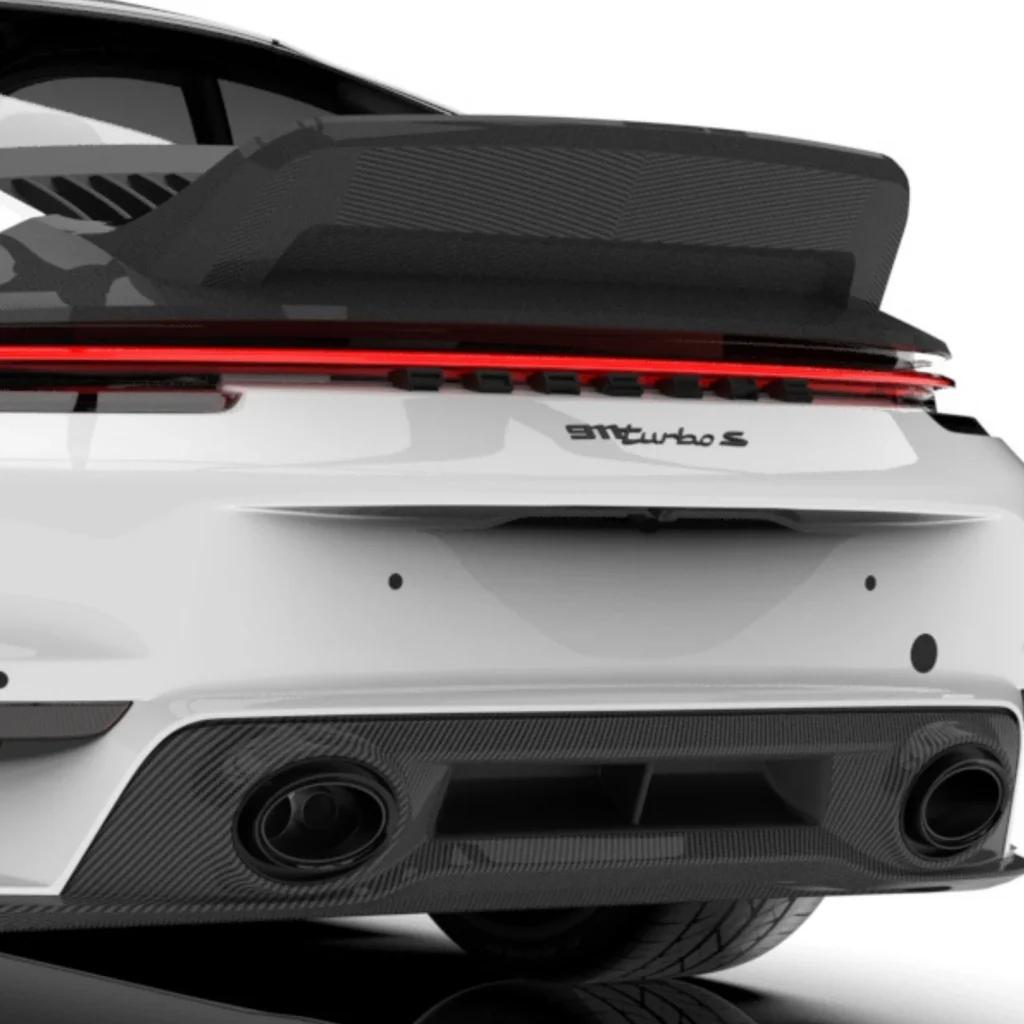
The rear diffuser of a 911 manages intense aerodynamic underbody heat while facing debris thrown backward by the wide rear tires.
- The Swap: Replace the muted, textured plastic rear valance with a sharply sculpted dry carbon rear diffuser.
- The Preservation: Exhaust heat can gradually warp or discolor factory plastics over years of spirited driving. Autoclave-cured dry carbon tolerates extreme thermal energy effortlessly, preserving the look of your exhaust zone while shielding the real rear undertray from road grime.
Aerospace Engineering Meets OEM Fitment: The Dry Carbon Process
For the true Porsche connoisseur, the distinction between “wet” and “dry” carbon fiber is the difference between an amateur cosmetic overlay and authentic, motorsport-grade engineering. Most aftermarket accessories rely on a wet carbon process, where resin is manually brushed into a mold.
This traditional method results in a heavy, resin-rich component prone to yellowing, structural fatigue, and microscopic surface imperfections that ruin the flawless lines of your 911.
| Wet Carbon Fiber | Dry Pre-Peg Carbon |
| Excess resin = Added weight | Autoclave cured = Minimum weight |
| Prone to UV yellowing & fade | PPG clear coat = Showroom longevity |
At OG Carbon, our manufacturing philosophy aligns strictly with factory Weissach standards. We utilize pre-preg (pre-impregnated) carbon fiber matrixes, where the ideal ratio of carbon-to-resin is locked into the raw material under climate-controlled conditions.
The component is then cured inside a high-pressure autoclave. Under extreme heat and atmospheric compression, excess resin is consolidated out, resulting in a structurally flawless weave that boasts a vastly superior strength-to-weight ratio compared to standard factory plastic.
Every component – from our aggressive 992 Basic Aero Kits to our bespoke V-weave ducktail spoilers – is finished with an elite PPG transparent acrylic clear coat. This ensures absolute UV-stabilization and a deep, mirror-like gloss that matches original factory equipment (OE) tolerances perfectly.
Because we design around existing factory mounting locations, these bolt-on upgrades require zero drilling, zero bodywork modification, and zero permanent disruption to your chassis. You achieve a dramatic, track-inspired aesthetic transformation while preserving the completely stock, reversible condition required by Porsche Financial Services lease agreements and collector valuation metrics.
Check out the OG Carbon guide on achieving the ultimate OEM+ evolution.
The Legal and Financial Safeguards
Two major concerns often stall a collector’s desire to customize: factory warranties and leasing agreements. Executing your build with 100% reversible parts completely neutralizes both risks.
The Magnuson-Moss Warranty Act: Your Legal Shield
A common myth perpetuated by aggressive dealership service advisors is that installing aftermarket parts completely voids your Porsche factory warranty. In the United States, this practice is explicitly illegal under the Magnuson-Moss Warranty Act.
The Law: A vehicle manufacturer cannot legally deny coverage under a factory warranty simply because an aftermarket component is installed on the vehicle. The manufacturer or dealer must conclusively prove that the specific aftermarket part caused the mechanical or structural failure in question.
Because dry carbon fiber body accessories are purely structural and aerodynamic upgrades, they do not interface with the engine management, suspension geometry, or hybrid drivetrains of modern 911s. If your PDK transmission throws a code, a dealer cannot legally deny coverage because you installed a carbon fiber spoiler or mirror cap.
Navigating Porsche Financial Services Lease Returns
If you are leasing your 911 through Porsche Financial Services (PFS), customizing the vehicle might feel off-limits. However, Porsche’s official Excess Wear and Use Guidelines offer a straightforward path for enthusiasts:
- The Rule: Any aftermarket alterations—including custom wheels, aftermarket infotainment, spoilers, and body kits—must be professionally removed, and the vehicle must be returned to its exact original factory configuration prior to final turn-in.
- The Strategy: By utilizing precise, bolt-on dry carbon accessories, you can enjoy a uniquely customized car for the duration of your lease. Before the AutoVIN lease inspection takes place, simply schedule an afternoon to unbolt the carbon pieces and reinstall your pristine, zero-mile factory plastics. You avoid all excess wear fees because the original parts look exactly as they did the day you drove off the showroom floor.
How to Correctly Store Your Factory Porsche Parts
The preservation strategy is only half-complete if your original factory parts end up damaged while sitting in storage. Follow these archival steps to safeguard your stock components:
- Deep Clean and Decontaminate: Thoroughly wash the factory parts with a wax-free automotive shampoo to remove road film, insect acids, and brake dust.
- Apply Active Protection: Coat painted components in a premium synthetic sealant or ceramic spray to shield the paint from moisture and oxidation over long-term storage.
- Wrap for Impact Resistance: Wrap each individual component in high-density foam sheets or multiple layers of heavy-duty bubble wrap. Pay special attention to protecting delicate structural tabs and mounting clips.
- Environment Controls: Store the parts flat inside rigid cardboard boxes off the ground. Keep them in a dark, climate-controlled environment to prevent temperature fluctuations from warping the plastics or compromising the paint finish.
Reversible Modifications: Frequently Asked Questions (FAQ)
Does installing dry carbon fiber body components void my Porsche factory warranty?
No. Under the federal Magnuson-Moss Warranty Act, a dealership cannot legally void your bumper-to-bumper warranty simply because you installed aftermarket components. To deny a warranty claim, the dealer must conclusively prove that the specific aftermarket component caused the mechanical or electrical failure. Because high-end dry carbon fiber panels are purely structural and cosmetic upgrades that utilize factory mounting locations, they do not interfere with your engine, suspension, or powertrain electronics.
What is the exact difference between “wet” and “dry” carbon fiber?
The difference comes down to manufacturing precision and weight:
- Dry carbon fiber is made from “pre-preg” (pre-impregnated) material cured under immense pressure and heat inside an autoclave. This creates an incredibly thin, ultra-lightweight, and flawless structure that matches original equipment manufacturer (OEM) alignment tolerances perfectly.
- Wet carbon fiber is hand-laid with wet resin and air-dried. It is significantly heavier, much thicker, prone to structural imperfections, and frequently requires modifying your factory bumper or brackets just to make it fit.
Will changing to carbon fiber parts affect my car’s resale value?
The answer is, no. If you use permanent or low-tier modifications, yes – resale value typically drops because high-end buyers want an unmolested car. However, using 100% reversible dry carbon accessories actually protects your resale value. By wrapping and storing your original factory plastics in your garage, you ensure they remain free of rock chips, driveway scrapes, and UV fading. When it’s time to sell, you can easily restore the car to 100% stock purity while commanding top-tier market value.
Summary: Future-Proofing Your Passion
Modifying your Porsche 911 doesn’t have to mean sacrificing its future value or risking financial penalties. By adopting the mindset of preservation through modification, you actively protect your investment while tailoring the car to your precise aesthetic standards.
When you choose flawless, autoclave-cured dry carbon components that rely exclusively on factory mounting points, you get the best of both worlds: an unforgettable, aggressive presence on the road today, and a guaranteed path back to standard factory purity tomorrow.
Stop letting the fear of rock chips and depreciation dictate your driving experience. Protect your asset, elevate your style, and experience your 911 exactly the way it was meant to be enjoyed.
Ready to elevate your Porsche 911 build?
Explore the exact-fit, autoclave-cured collection at the OG Carbon shop to discover aerospace-grade dry carbon components engineered specifically for your chassis. Otherwise, the experts at OG Carbon are thrilled to discuss your options for preserving your vehicle’s legacy through elite modification.