Few sports cars command the same level of engineering reverence as the Porsche 911. With the launch of the 992.2 generation, Porsche engineers have once again fundamentally redefined what is possible by bridging the gap between track-focused motorsport engineering and everyday street usability. At the absolute core of this generational leap is a highly sophisticated, predictive network of systems known as Porsche Active Aerodynamics (PAA).
Far from being mere aesthetic updates, the striking exterior revisions of the 992.2 – most notably visible on the high-performance Carrera GTS T-Hybrid and the flagship Turbo S models – represent an uncompromising masterclass in managing airflow. By blending advanced fluid dynamics with cutting-edge composite manufacturing, Porsche has engineered a machine that surgically manipulates atmospheric pressure to maximize high-speed grip, balance cooling efficiency, and minimize drag.
The Physics of Airflow: How PAA Controls Lift and Drag
To truly understand the brilliance of the 992.2’s aerodynamic profile, one must first grasp the hostile environment a high-performance sports car encounters at speed. As velocity increases, air resistance grows exponentially. Without precise management, the air splitting over the curved profile of a sports car acts exactly like an airplane wing, creating low pressure above the vehicle and a high-velocity, high-pressure zone underneath. This phenomenon is known as aerodynamic lift, and it is the absolute enemy of high-speed stability, causing the steering to feel light, vague, and disconnected.
Porsche Active Aerodynamics counters this by continuously altering the car’s physical shape to achieve three primary, often conflicting goals:
- Downforce Generation: Pushing the tires firmly into the pavement to maximize mechanical grip through high-speed sweeps and heavy braking zones.
- Drag Reduction: Smoothing out air paths to minimize resistance, thereby maximizing top-speed acceleration and highway efficiency.
- Thermal Management: Routing precise volumes of air directly to the radiators, intercoolers, and braking systems based on real-time thermal load.
To achieve this harmony, the 992.2 treats the vehicle as a living, breathing fluid dynamic ecosystem. The central engine control unit processes variables such as vehicle speed, lateral acceleration, ambient temperature, throttle position, and selected driving mode to command various active elements to open, close, extend, or tilt within fractions of a second.
Front-End Revolution: Active Vertical Cooling Air Flaps
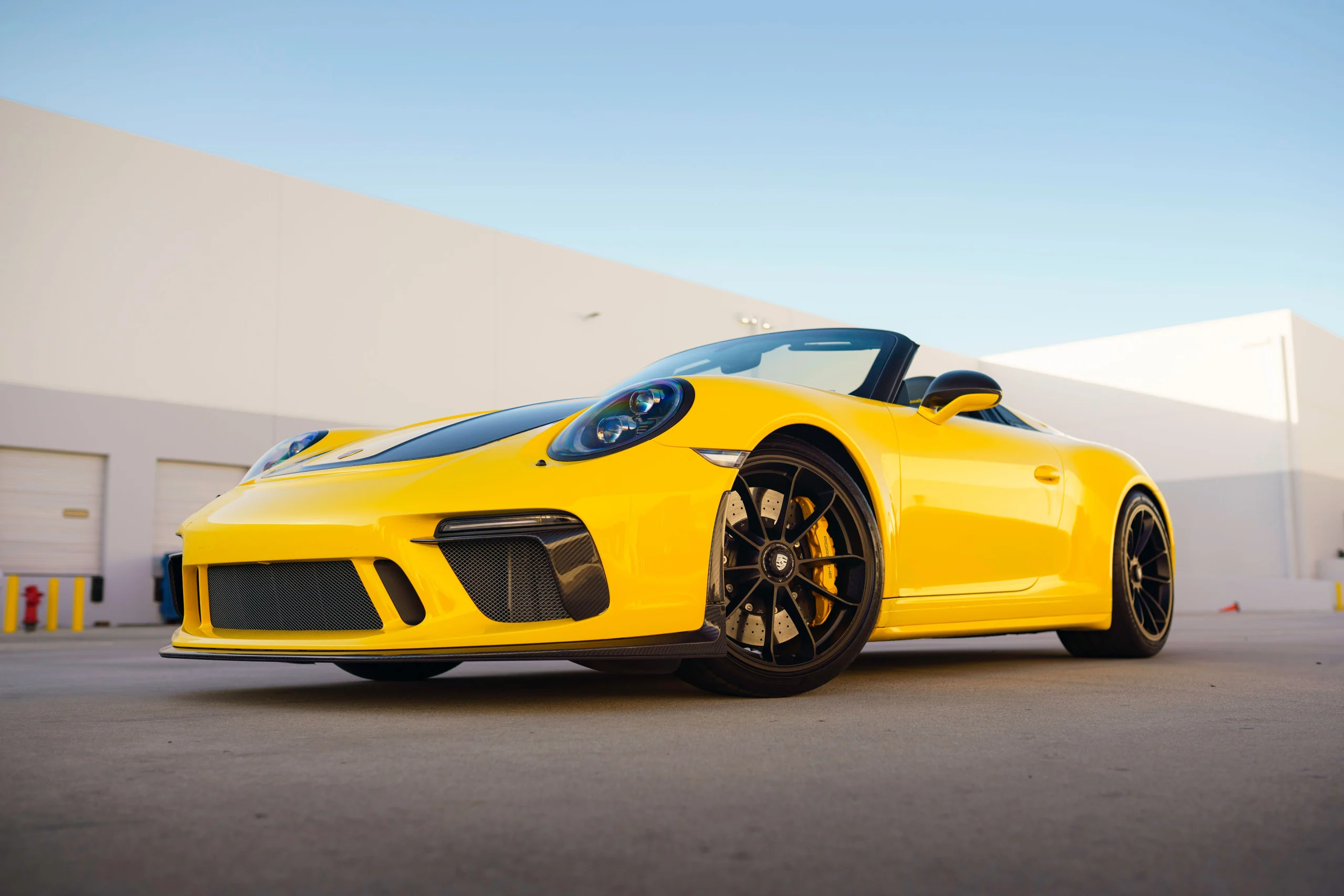
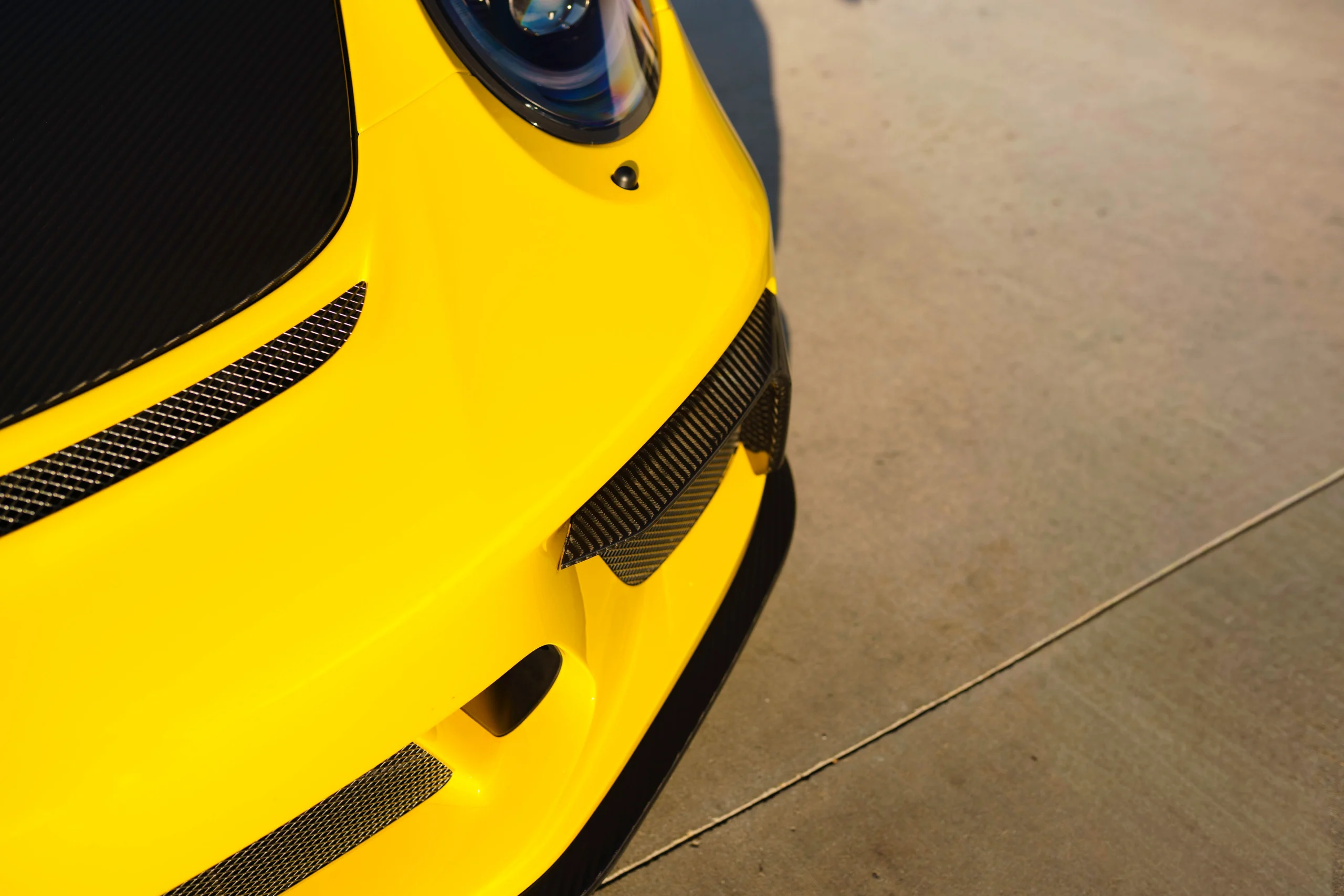
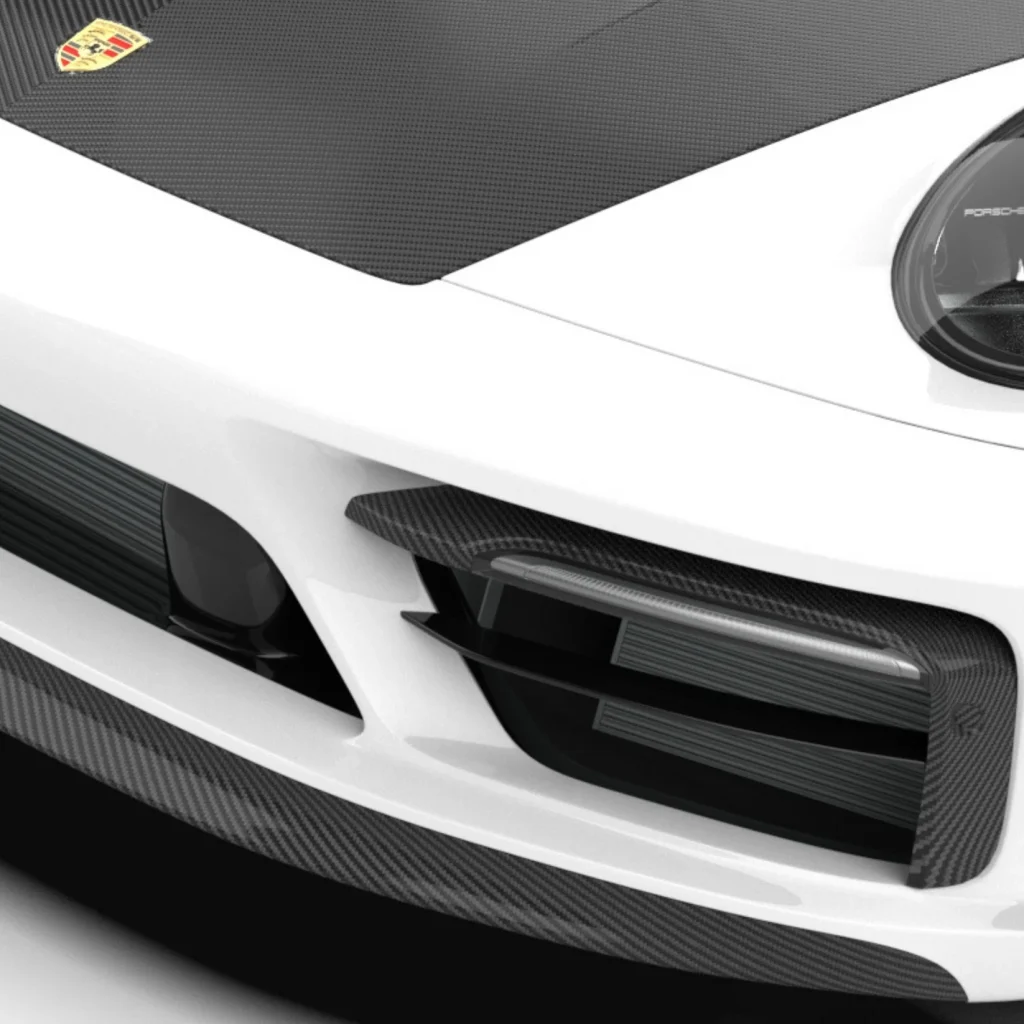
The most visually distinct and technologically advanced element of the 992.2’s front fascia is the introduction of vertically arranged active cooling-air flaps. Hidden deep within the larger, aggressive front intakes, these five distinct slats replace the passive mesh grills of older generations and operate as a dynamic gatekeeper for the car’s primary cooling radiators.
| 992.2 ACTIVE FRONT AERO MATRIX | ||
| DRIVING CONDITION | FLAP POSITION | AERODYNAMIC EFFECT |
| Low Thermal Load (Cruising 15-170kmh) | Fully Closed | Minimizes drag coefficient and eliminates front lift |
| High performance (Track/Sport +) | Variable Opening (5 distinct steps) | Balances core cooling with targeted downforce |
| Extreme Velocity (Greater than 170kmh) | Fully Open | Maximum radiator flow. Peak high speed brilliance |
| Heavy Braking (Emergency Decel.) | Snap-Open | High-drag “Airbrake”. Stabilizes front axle |
These flaps are driven by hyper-responsive servo motors capable of adjusting each side independently through five precise stages of articulation.
The Cruise Efficiency Profile
When cruising on the highway under low thermal stress (typically between speeds of 15 km/h and 170 km/h), the cooling flaps snap completely shut. By sealing the front bumper, air is prevented from entering the cramped, high-resistance environment of the radiator bays. Instead, the oncoming air is forced to cleanly split over the nose and under the smooth underbody panelling. This reduces the vehicle’s overall drag coefficient by up to 10%, drastically improving fuel economy and lowering cabin wind noise. Very cool tech, right?
The Thermal Management Profile
The moment you click the steering wheel dial into Sport Plus or push the car hard on a mountain pass, the engine management system foresees the impending thermal spike. The vertical flaps open seamlessly to direct massive volumes of air through the high-efficiency radiators.
Adaptive Underbody Diffusers
Crucially, the 992.2 pairs these front bumper flaps with adaptive front diffusers integrated directly into the underbody panelling. When the front bumper flaps open to cool the car, the underbody diffusers open in tandem, venting air directly into the front wheel arches. This brilliant piece of packaging creates an extreme low-pressure zone beneath the nose, completely counteracting the lift that would normally be caused by forcing air into the front radiators. It simultaneously forces a blast of cool air over the front brake rotors, ensuring total resistance to brake fade during repetitive, high-g decelerations.
Rear-End Mastery: The Retractable Tail Wing
If the front of the 992.2 is responsible for slicing through the air and maintaining front-end bite, the rear is tasked with anchoring the car’s weight distribution. Because the 911 retains its iconic, historic rear-engine layout, maintaining absolute stability over the rear axle at triple-digit speeds is paramount.
The 992.2 features an entirely re-engineered, wider retractable rear spoiler seamlessly integrated into the rear decklid. This wing operates on a multi-stage mechanism that alters both its extension height and its angle of attack depending on the driving environment.
The Intercooler Emulsion Secret
There is a secret secondary function to the 992.2’s rear wing that showcases the obsessive nature of Porsche’s engineering division: forced induction cooling.
On the Carrera, GTS and Turbo models (non N/A GT3 models) the engine’s intercoolers sit directly beneath the rear decklid grille. When the rear wing extends into its higher performance profiles, it doesn’t just create downforce – the physical scoop shape creates a massive high-pressure wall of air right in front of the engine intake grille. This forces a high-velocity stream of fresh ambient air directly through the core of the intercoolers, dropping intake air temperatures significantly. Lower intake temperatures mean denser oxygen delivery to the combustion chambers, allowing the engine to sustain peak horsepower without retarding ignition timing, even during grueling, hot-weather track sessions.
The Active Airbrake: Motorsports Technology on the Street
One of the most awe-inspiring features of the PAA network on top-tier models like the 992.2 Turbo S is its integrated Airbrake function. This system acts as a digital co-pilot during emergency maneuvers or heavy threshold braking from high velocities.
When the vehicle’s forward-looking radars and brake pressure sensors detect an emergency stop or an aggressive deceleration zone into a racetrack corner, the PAA system immediately overrides its efficiency parameters and enters Performance Phase 2:
- The Rear Wing snaps to its maximum height and angles itself to its steepest possible inclination, acting as a massive physical sail to catch the air.
- The Active Front Spoiler Lip deploys fully downward beneath the bumper.
- The Vertical Front Flaps instantly pop completely open.
By instantly shifting all aerodynamic elements into a maximum-drag configuration, the air itself helps slow the vehicle down, reducing the workload on the carbon-ceramic brake rotors. More importantly, this sudden spike in downforce pushes the chassis down hard into the suspension springs, significantly stabilizing the car under heavy braking, preventing rear-end squirm, and keeping the contact patches of all four tires perfectly flat against the asphalt.
Track Weapons: The Aerodynamics of the GT3 and GT3 RS
While the Carrera, GTS and Turbo lineups utilize active, hidden systems to balance daily comfort with performance, Porsche’s GT department approaches aerodynamics with a singular, uncompromised goal: sheer track domination. The 992-generation GT3 and GT3 RS represent the absolute zenith of legal street car aerodynamics, utilizing visible, aggressive aerodynamic components derived directly from the Le Mans-winning 911 RSR race car.
The Swan-Neck Wing Innovation
Standard on the GT3, the striking swan-neck rear wing mounts the support brackets from the top of the wing element rather than supporting it from underneath. While this looks like a purely cosmetic choice, it is driven entirely by fluid dynamics.
The underside of a wing is actually its most critical surface; fast-moving air underneath creates the low pressure necessary to pull the rear of the car down. Conventional bottom-mount brackets create structural turbulence and air separation right along this critical under-surface. By suspending the wing from above, the bottom surface remains perfectly clean, resulting in a 45% increase in clean downforce over the previous 991.2 generation GT3 without adding a single gram of extra drag.
The GT3 RS Central Radiator Concept
The 992 GT3 RS takes this philosophy to an extreme. Look closely at the nose of a GT3 RS, and you will notice that the front luggage compartment (the frunk) is completely gone. In its place sits a massive, angled single central radiator—a packaging design taken directly from motorsport.
By eliminating the traditional three-radiator setup found in standard 911s, Porsche freed up immense real estate on the outer edges of the front bumper. This allowed engineers to integrate highly complex, continuously adjustable active wing flaps inside the front wheel arches. These front flaps work in perfect, real-time synchronization with a towering, top-mounted rear wing equipped with a DRS (Drag Reduction System).
How DRS Works on the Street: When blasting down a long straightaway, pressing a button on the steering wheel (or letting the car’s computer do it automatically) flattens out the upper element of the massive rear wing. This sheds drag instantly, allowing the GT3 RS to reach its maximum possible top speed. The moment you touch the brakes for a corner, the wing snaps back into its aggressive angle, hammering 860 kilograms of downforce into the chassis to provide unbelievable cornering speeds.
Elevating Performance: The Critical Value of Carbon Fiber
As Porsche pushes the limits of active aerodynamic engineering, managing vehicle weight becomes an intense challenge. Active wings, heavy servo motors, and adjustable underbody flaps all add physical mass to the vehicle. To counteract this weight penalty and maximize the efficiency of these aerodynamic surfaces, the integration of ultra-lightweight Carbon Fiber Reinforced Plastic (CFRP) components is absolutely mandatory.
For high-end transformations, specialized engineering firms use a 6K Twill weave carbon fiber, processed using precise autoclave pre-preg technology. This material yields a component that is up to 70% lighter than standard stamped steel or aluminum body panels while maintaining immense structural rigidity.
Preventing High-Speed Surface Flex
Why does stiffness matter so much in aerodynamics? When a vehicle is traveling at 250 km/h and generating hundreds of kilograms of downforce, the air pressure hitting the front splitter, side skirts, and rear wing is immense. Standard plastic, fiberglass or cheap, wet carbon aftermarket body parts will actually bend, bow, and deform under this level of physical stress.
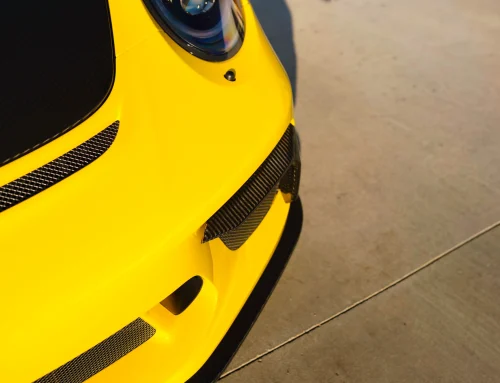
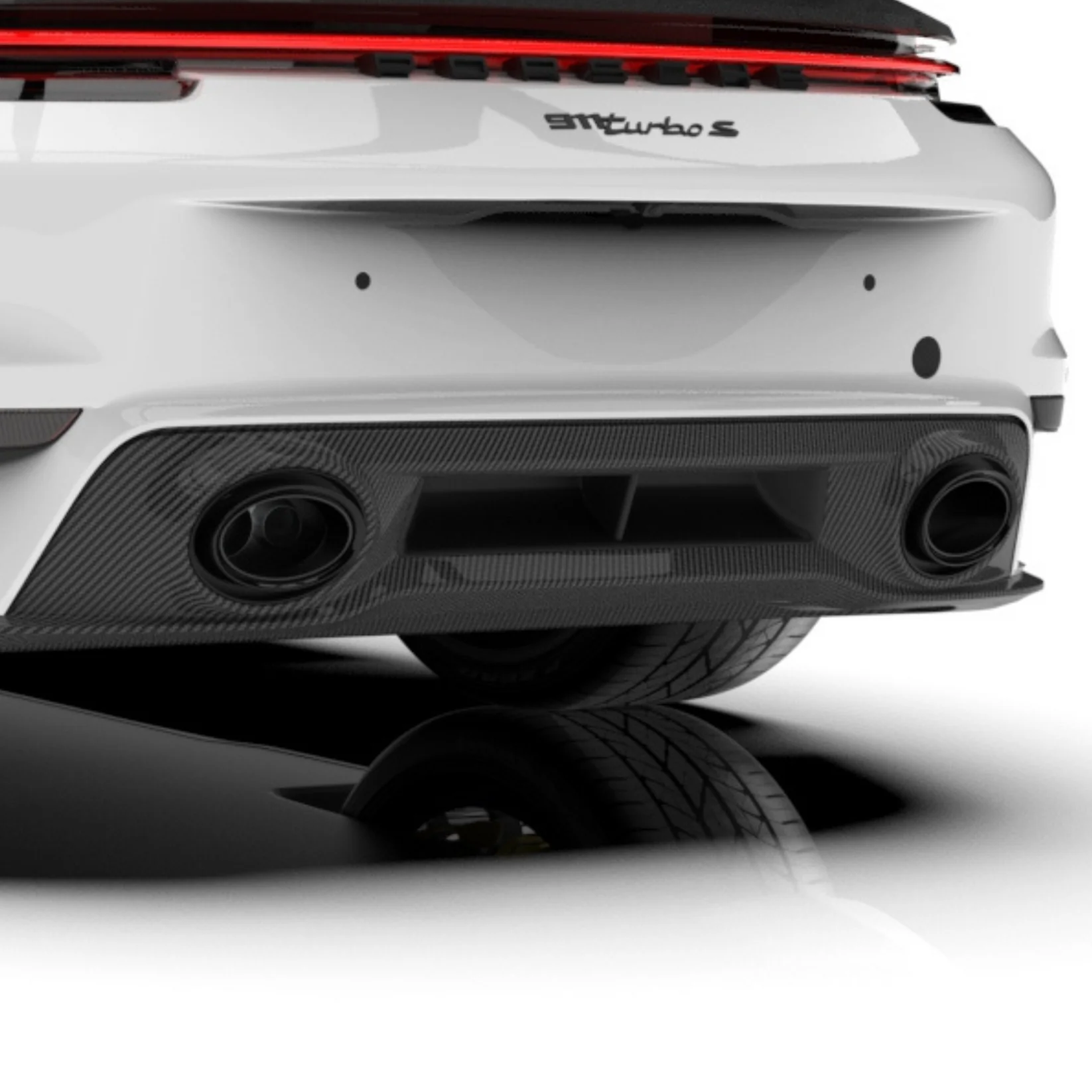
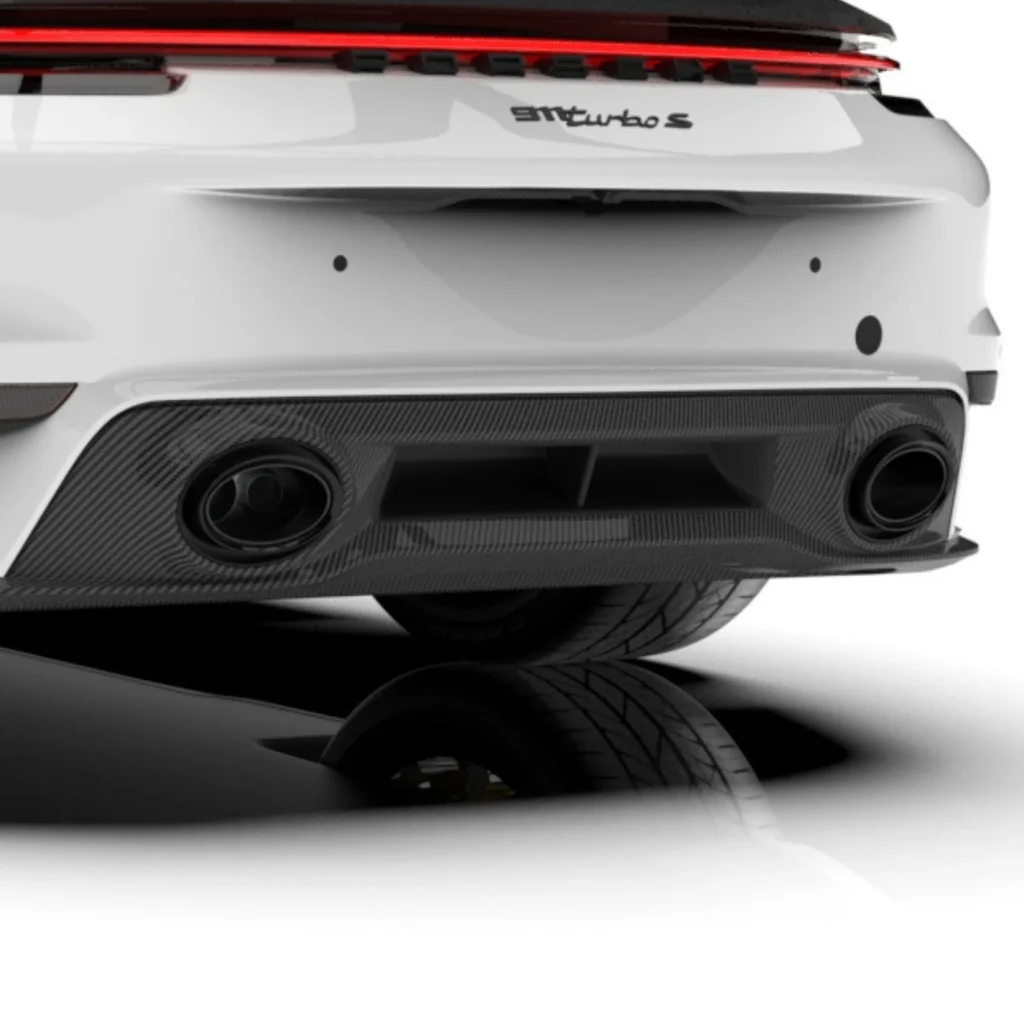
When an aerodynamic component flexes, its carefully engineered shape changes. Air separation occurs, the clean laminar flow turns into chaotic turbulence, and the vehicle’s high-speed balance is instantly compromised. High-grade dry carbon fiber components feature a completely rigid structural weave that resists deflection entirely. Whether dealing with a front lip splitter catching air under the nose or an aggressive rear diffuser routing air out from under the chassis, premium carbon fiber ensures that the aerodynamic geometry remains flawless under extreme racing conditions.
Maximizing the Venturi Effect: Side Skirts and Rear Diffusers
Aerodynamics is not just about what happens on top of the car; the magic truly happens underneath. The 992.2 utilizes an entirely flat underbody tray designed to turn the entire bottom of the car into a massive wing through a principle known as the Venturi Effect.
According to Bernoulli’s principle of fluid dynamics, when a fluid (in this case, air) is forced through a constricted, narrow space, its velocity must increase, while its pressure simultaneously drops.
The Underbody Low-Pressure Vacuum
As the 992.2 drives forward, air is funneled underneath the car’s nose into a very tight space between the flat undertray and the road surface. Because the air must travel faster through this narrow gap, it creates a massive zone of low-pressure suction beneath the passenger cell. This low pressure literally vacuums the car down toward the pavement, generating massive downforce without creating any of the fuel-sapping aerodynamic drag that comes from mounting a giant wing on top of the car.
Side Skirts as Atmospheric Curtains
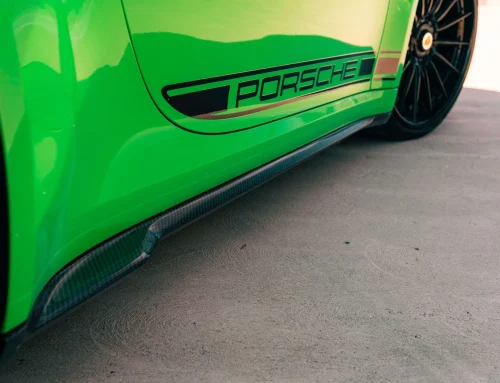
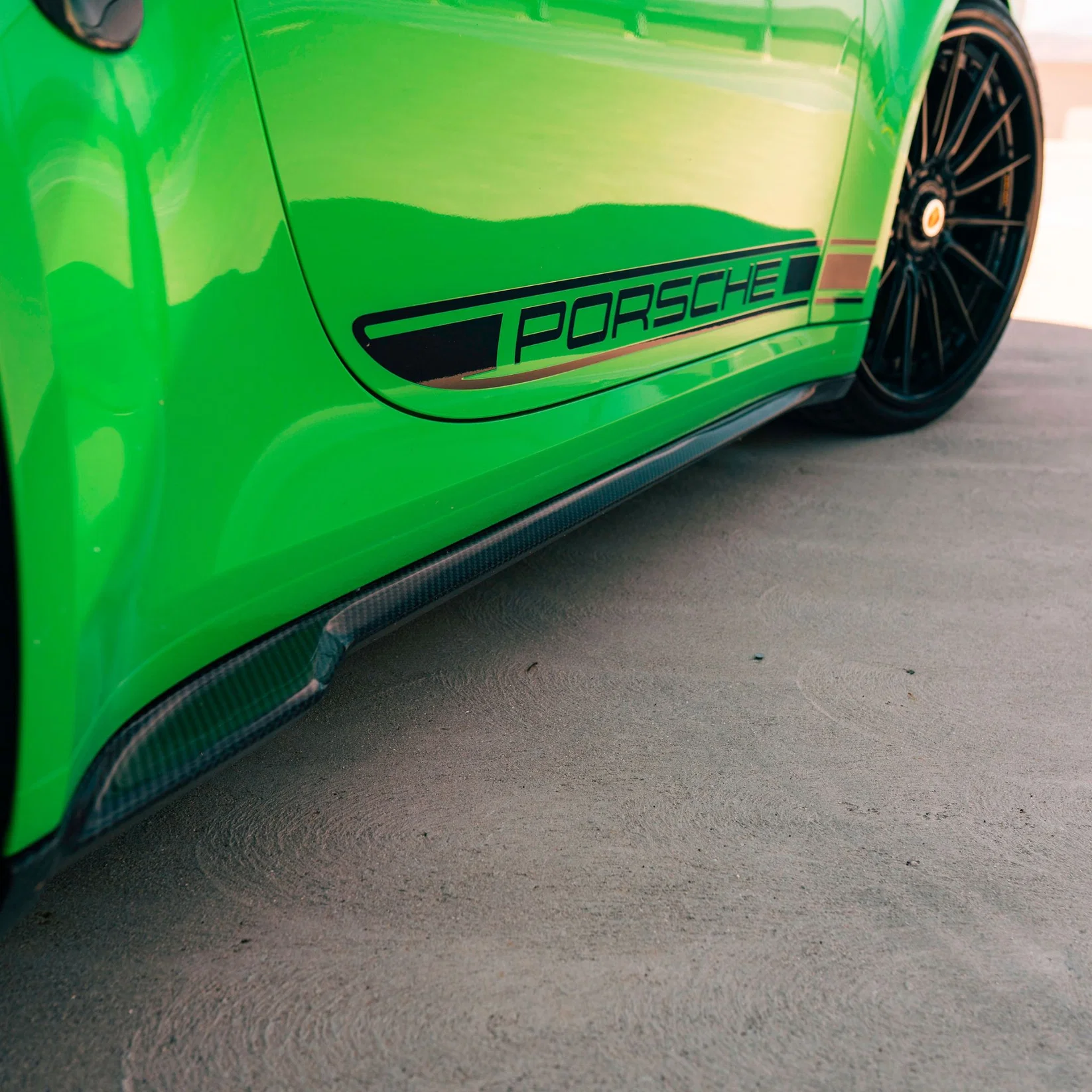
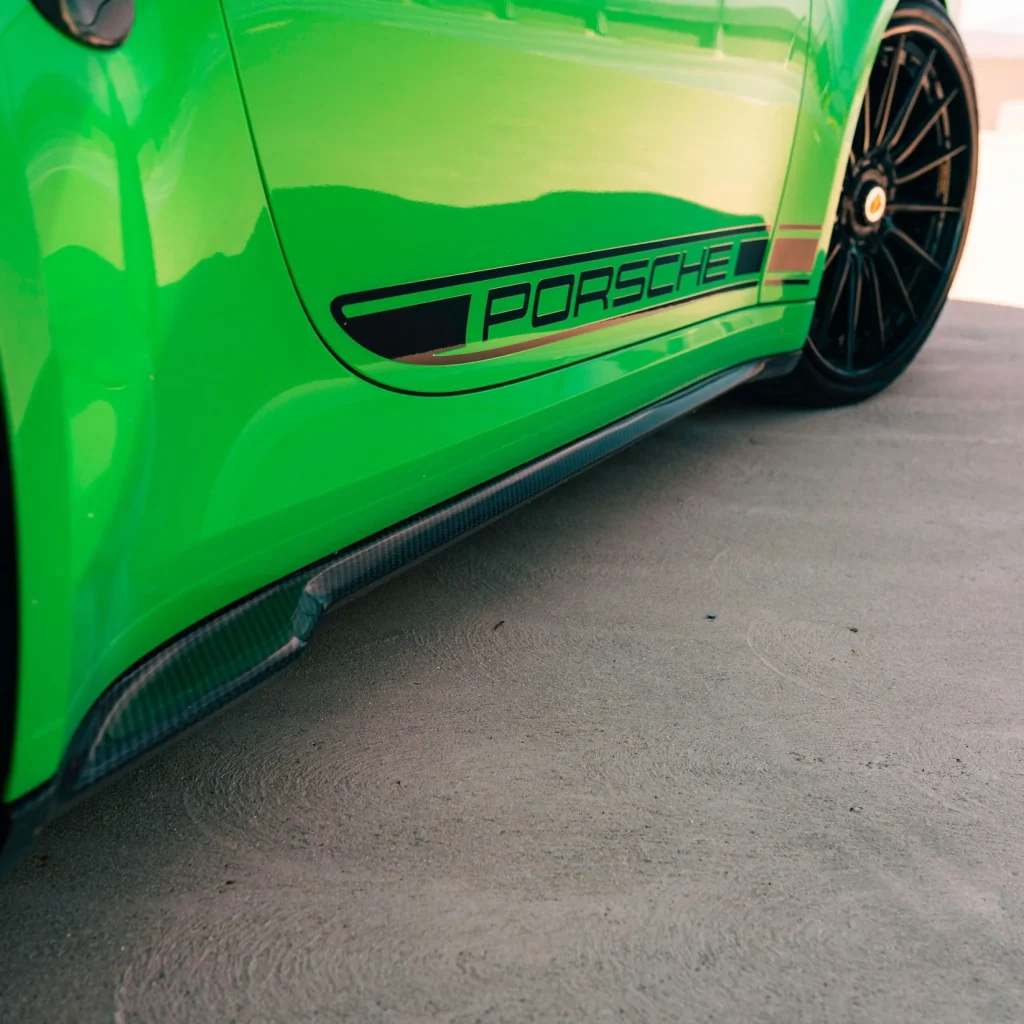
To maintain this intense low-pressure vacuum underneath the car, you must prevent high-pressure air from the sides of the vehicle from leaking under the chassis. This is where extended carbon fiber side skirts become functional performance parts. They act as physical vertical barriers, sealing the air paths. By blocking outside air from rushing under the car, the underbody vacuum remains perfectly intact, keeping the car glued through high-speed transitions.
The Rear Diffuser Exit Ramp
Finally, the air travelling under the car reaches the rear diffuser—a carefully calculated, upward-sloping ramp at the back bumper. The job of the diffuser is to gradually expand the compressed underbody air back to normal atmospheric pressure, blending it smoothly with the wake of air coming off the top of the car. This prevents a pocket of chaotic, turbulent air from forming behind the rear bumper, which would act as an invisible parachute pulling the car backward.
Summary: The Harmony of Active Design
The Porsche 992.2 represents a monumental achievement in modern automotive design. It is proof that true high-speed performance cannot be achieved by raw engine horsepower alone.
By treating airflow as a dynamic asset rather than a resistance barrier, Porsche’s active aerodynamic architecture transforms the 911 into an adaptable, shape-shifting machine capable of hunting lap times on a closed circuit one minute, and cruising down a coastal highway with low-drag efficiency the next. Through the deployment of active vertical front flaps, multi-stage retractable wings, and ultra-rigid carbon fiber composites, the 992.2 stands as an engineering marvel – a vehicle shaped by the air itself to deliver an unparalleled driving experience.
If you’re ready to take your Porsche 911 (992.1) experience to the next level, check out the OG Carbon Catalogue and chat with the OGC experts. If you’re interested in learning more, we have a number of blogs dedicated to sharing our wealth of expert knowledge and passion for what we do and specialize in.