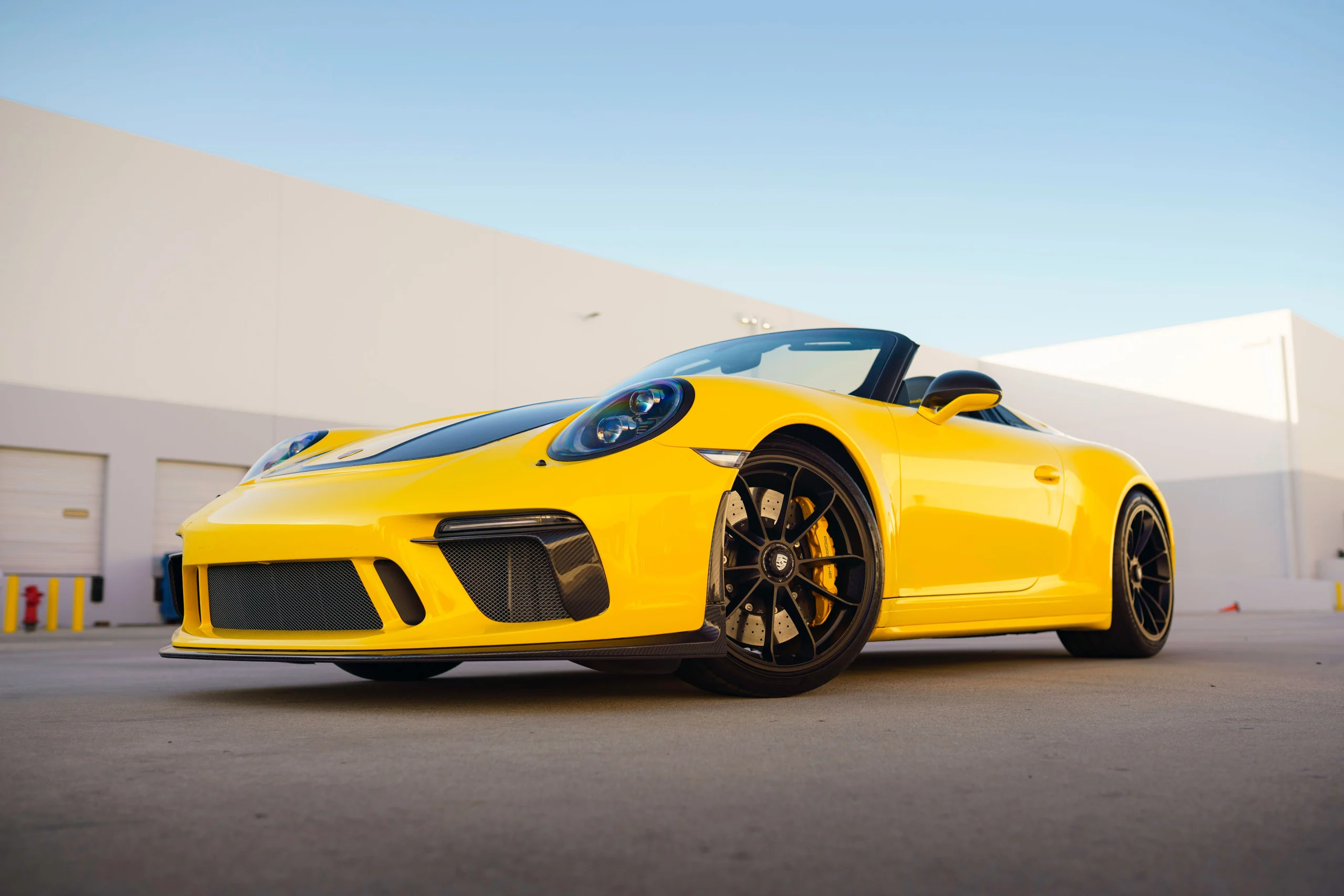
The Porsche 992 generation represents an absolute high-water mark in sports car engineering.
Whether evaluating a base Carrera, a widebody GTS, a blistering Turbo S, or a track-focused GT3 RS, the 992 chassis is a masterclass in modern automotive balance. Porsche’s Weissach development team engineered every millimetric panel gap, active aerodynamic flap, and underbody vent with exacting thermal and dynamic tolerances.
When a 992 rolls off the assembly line in Zuffenhausen, it operates as a finely calibrated system where lightweighting, drag coefficient, and downforce exist in delicate equilibrium.
For discerning owners looking to personalize their vehicle, reduce mass, or enhance aesthetic aggression, carbon fiber remains the premier material of choice.
The high strength-to-weight ratio, structural rigidity, and distinctive weave of carbon fiber make it the natural complement to Porsche’s modern design language. However, the aftermarket composite landscape is fraught with hidden compromises.
| THE AFTERMARKET CARBON FIBER DILEMMA | |
| BUDGET / WET-LAYUP ALTERNATIVES | OG CARBON AUTOCLAVE PRE-PREG SOLUTIONS |
| Hand-laid wet resin over fiberglass | 100% Aerospace-grade pre-impregnated carbon |
| Open-air cured with void pockets | High-pressure autoclave vacuum chamber curing |
| Uncontrolled thermal resin shrinkage | Exacting 3D CAD modeling to OEM tolerances |
| Cheap polyester clear coats (yellows) | Automotive-grade PPG UV-resistant clear coat |
| Distorts factory active aero logic | Direct bolt-on integration retaining OEM logic |
| Demands 10–20+ body shop labor hrs | True 1:1 plug-and-play installation |
The market is saturated with low-tier, wet-layup carbon fiber components manufactured in open-air molds using cheap fiberglass backings and unstable polyester resins. While these parts carry enticingly low upfront price tags on paper, they present severe long-term headaches for 992 owners:
- Severe Body Shop Labor Inflation: Poor mold tolerances lead to twisted mounting flanges, misaligned hinge holes, and uneven panel gaps that require 15 to 20+ hours of expensive body shop sanding, heating, and reshaping to fit.
- Disrupted Active Aerodynamics: Crude rear wing and spoiler designs often force owners to disconnect factory actuator motors, triggering permanent ECU warning lights on the digital dash and altering high-speed stability. Check out the OG Carbon blog on the Aerodynamic Impact of a Ducktail Spoiler.
- Resin Degradation and Yellowing: Inadequate UV protection in cheap gelcoats causes resin breakdown within months of sun exposure, resulting in unsightly yellowing, cloudiness, and surface haze.
- Thermal Warping and Heat Trapping: Poorly ventilated engine covers and scoops trap radiant engine heat, causing structural distortion and restricting critical airflow to top-mounted intercoolers.
At OG Carbon, we view carbon fiber manufacturing not as a volume cosmetic business, but as a discipline of precision aerospace engineering. By employing 100% autoclave pre-preg dry carbon production, CAD surface modeling, and high-purity PPG UV clear coats, our catalog provides seamless, direct bolt-on solutions that preserve factory performance while elevating aesthetic impact.
Check out our most recent blog on The Hidden Cost of Bad Fitment.
Below, we address the most frequently asked technical questions from Porsche 992 owners on Rennlist, 6SpeedOnline, and trackside paddocks worldwide—breaking down the underlying mechanics of each issue and detailing how OG Carbon’s engineering resolves them.
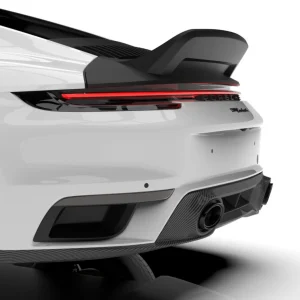
“Will a ducktail spoiler throw fault codes or disrupt my 992’s active aerodynamics?”
The Problem
The Porsche 992 generation features a sophisticated active rear aerodynamic system. Unlike older platforms with simple up-or-down rear wings, the 992’s rear spoiler deployment is governed by real-time vehicle telemetry: speed, drive mode (Normal, Sport, Sport Plus), sunroof position, and ambient thermal conditions.
When the spoiler deploys, it changes position to balance rear axle downforce with front splitter resistance, while simultaneously channeling airflow directly into the twin intercooler air scoops positioned below the decklid.
Many aftermarket ducktail spoilers – designed to emulate the iconic 1973 Carrera RS 2.7 or the modern 992 Sport Classic, fail to account for this active mounting logic. Installing a budget fixed ducktail often requires unplugging the factory spoiler actuation motor or forcing it into a permanently retracted state.
The moment the ECU attempts to deploy the rear aero at highway speeds, it detects motor resistance or harness disconnection, immediately triggering a persistent “Rear Spoiler Control Fault” warning light on the digital instrument cluster. Furthermore, poorly shaped fixed ducktails disrupt the pressure gradient over the rear decklid, starving the intercoolers of vital airflow and causing power drop due to elevated intake air temperatures (IATs).
The Solution
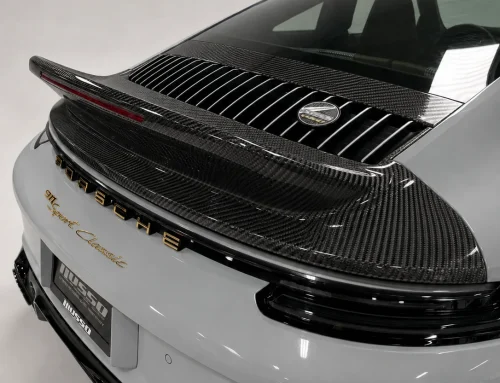
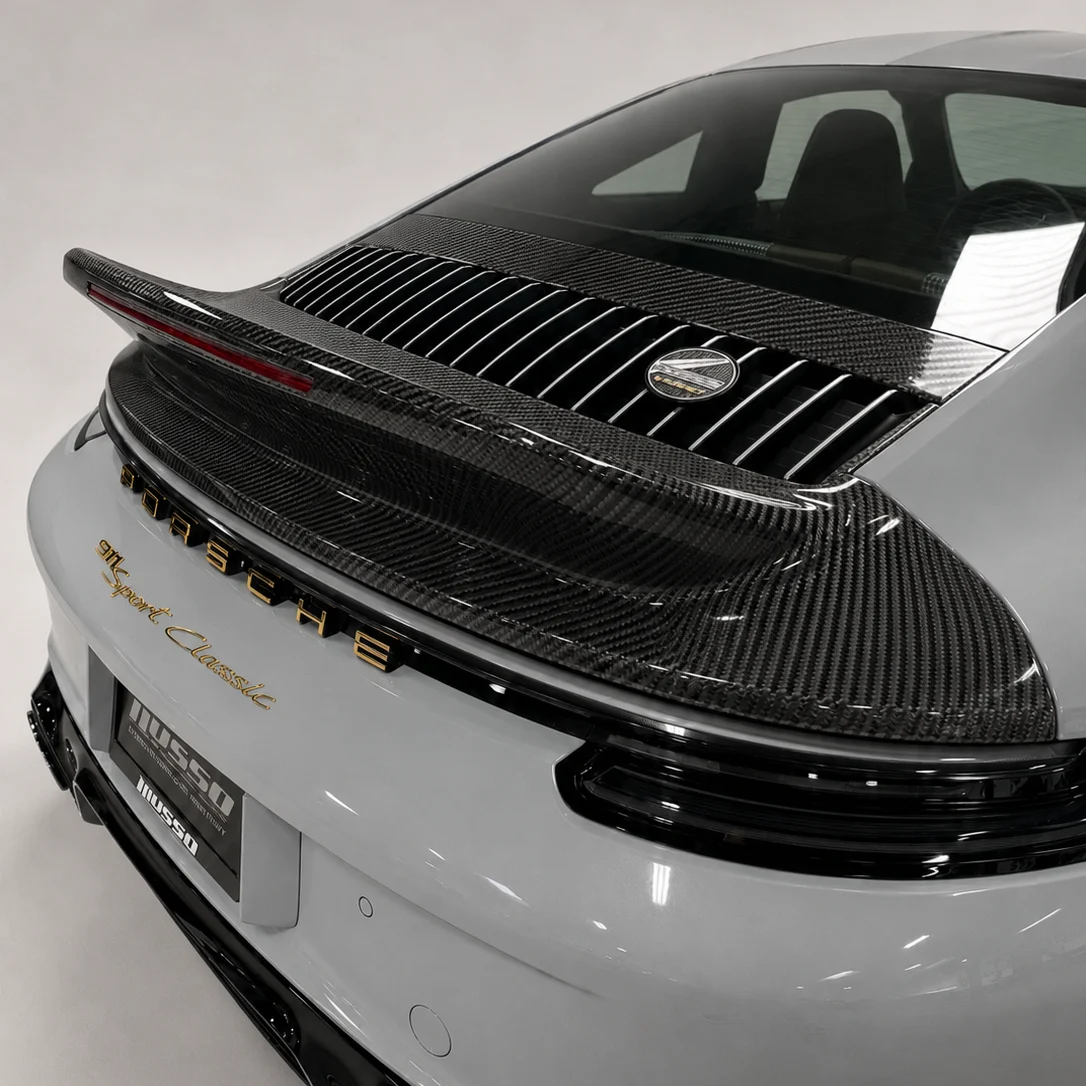
The OG Carbon Bespoke 6K V-Weave Ducktail Spoiler is engineered from the ground up as a dedicated OEM+ solution for the 992 platform. Rather than forcing a crude fixed attachment that fights the car’s electronics, our ducktail is manufactured using precision 3D scan data to integrate seamlessly with Porsche’s factory mounting architecture and wiring logic.
| 992 REAR DUCKTAIL SPECIFICATION & ENGINEERING | |
| SPECIFICATION | OG CARBON TECHNICAL PARAMETER |
| Construction Method | 100% High-Pressure Autoclave Pre-Preg Dry Carbon |
| Weave Architecture | Bespoke 6K Chevron V-Weave (Centered Alignment) |
| Harness & Error Code Status | 100% Plug-and-Play / Zero Dashboard Faults |
| Intercooler Airflow Efficiency | CFD-Tested to Match/Exceed Factory Ducting |
| Surface Coating | Multi-Layer PPG Automotive UV Clear Coat |
| Compatibility | Porsche 992 Carrera / S / GTS / Turbo Models |
Constructed entirely from autoclave pre-preg dry carbon fiber, the OG Carbon Ducktail delivers significant weight savings over heavy cast factory spoiler assemblies while maintaining high torsional rigidity. The underside of the spoiler features CAD-designed air guide channels that mirror factory intercooler scoop geometry, ensuring ambient air is forced directly into the heat exchangers at speed.
Visual artistry is equally prioritized: the outer skin features a striking 6K V-weave pattern, where the carbon strands meet along a perfect, hand-aligned center line. The result is a clean, classic silhouette with zero electronic fault codes, no harness splicing, and zero thermal degradation.
Read our Ultimate Guide to Porsche 992 Aerodynamics.
“Why does cheap carbon fiber turn yellow or cloudy after a year in the sun?”
The Problem
Few sights are as frustrating to a car enthusiast as an expensive carbon fiber hood or wing turning a dull, yellow-green shade or developing a milky, opaque haze across its surface after a few months of sun exposure.
This degradation is often misdiagnosed as simple clear coat fading, but the root cause lies deep within the resin chemistry used during manufacturing.
Budget carbon fiber manufacturers utilize wet-layup hand construction. In this process, dry carbon fabric is placed into a mold, and liquid polyester or low-grade epoxy resin is manually brushed over the top before curing at room temperature.
This method leaves microscopic air pockets trapped within the resin matrix. When exposed to ultraviolet (UV) radiation and solar heat, these unstable resins undergo photo-oxidation:
- Polyester Resin Breakdown: The chemical bonds within cheap polyester resins degrade when exposed to UV light, causing the material to yellow.
- Thermal Expansion Micro-Cracking: Solar heat causes trapped air pockets to expand, fracturing the clear gelcoat surface and creating a milky, cloudy haze that cannot be polished out.
- Delamination: As the resin matrix breaks down, the bond between the carbon fabric layers weakens, leading to structural separation.
The Solution
OG Carbon completely eliminates resin yellowing and clouding through aerospace-grade manufacturing protocols and superior chemical coating standards.
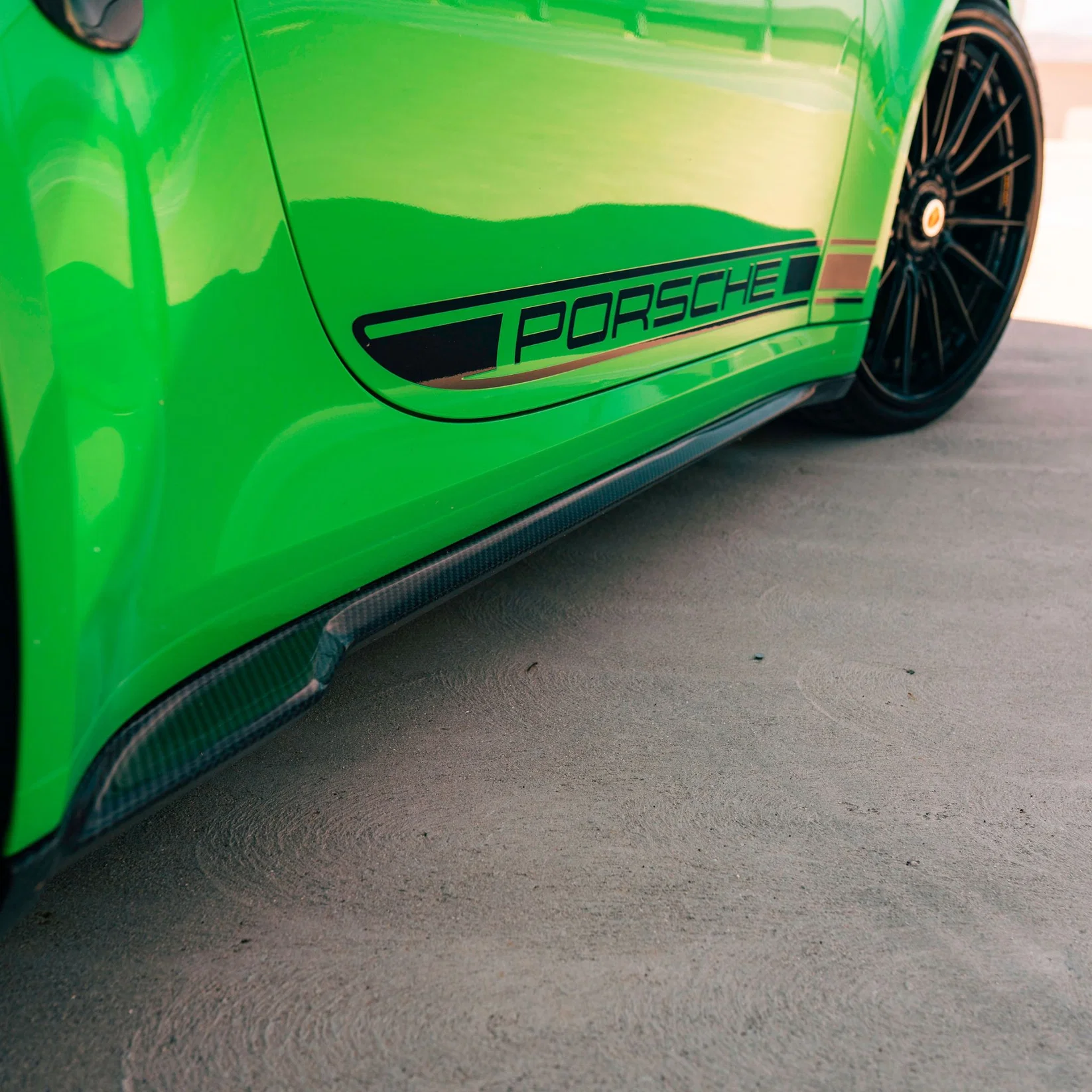
Every component in our line – including the 992 Carbon Fiber Hood, Side Rockers, and Rear Diffuser, is manufactured using pre-impregnated (pre-preg) carbon fiber sheets where the epoxy resin ratio is precisely controlled at the mill level.
The parts are vacuum-sealed and cured inside an autoclave under 6 atmospheres of pressure and temperatures exceeding 135°C. This forces all micro-air bubbles out of the matrix, creating a dense, void-free carbon structure.
To provide permanent defense against solar radiation, every finished OG Carbon component undergoes a multi-stage finishing process using automotive-grade PPG UV-resistant polyurethane clear coat.
This high-solids clear coat acts as an optical armor, blocking 99% of harmful UVA and UVB rays while enhancing the three-dimensional depth of the carbon weave.
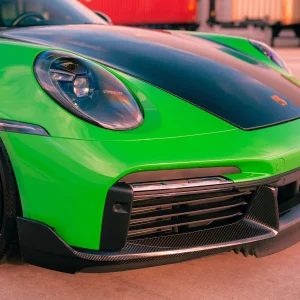
“How do I add front downforce without cracking my carbon lip on driveway inclines?”
The Problem
The low front overhang of the Porsche 992 platform – especially on Turbo, GTS, and sport-suspension-equipped Carrera models, makes front splitters highly vulnerable to roadway hazards. Steep driveway entrances, parking lot speed bumps, and track curbing present a constant threat to front-end carbon fiber.
When a low-quality carbon front lip strikes the pavement, its brittle structure works against it.
Wet-layup splitters featuring thick fiberglass cores and rigid resins lack elasticity. Upon impact, the kinetic energy cannot dissipate through the material, causing the resin matrix to crack instantly, splintering the underlying carbon fabric and destroying the piece.
The Solution
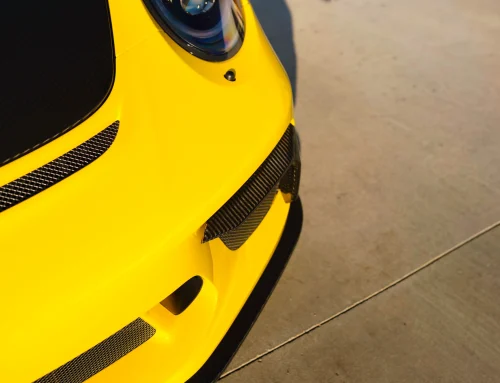
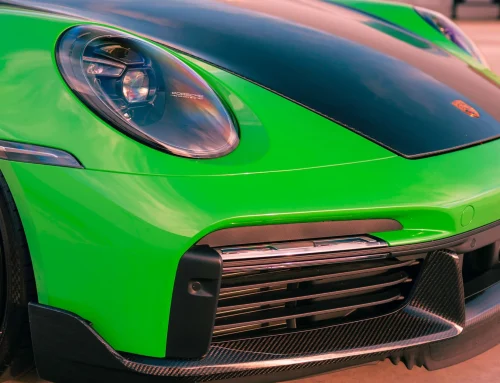
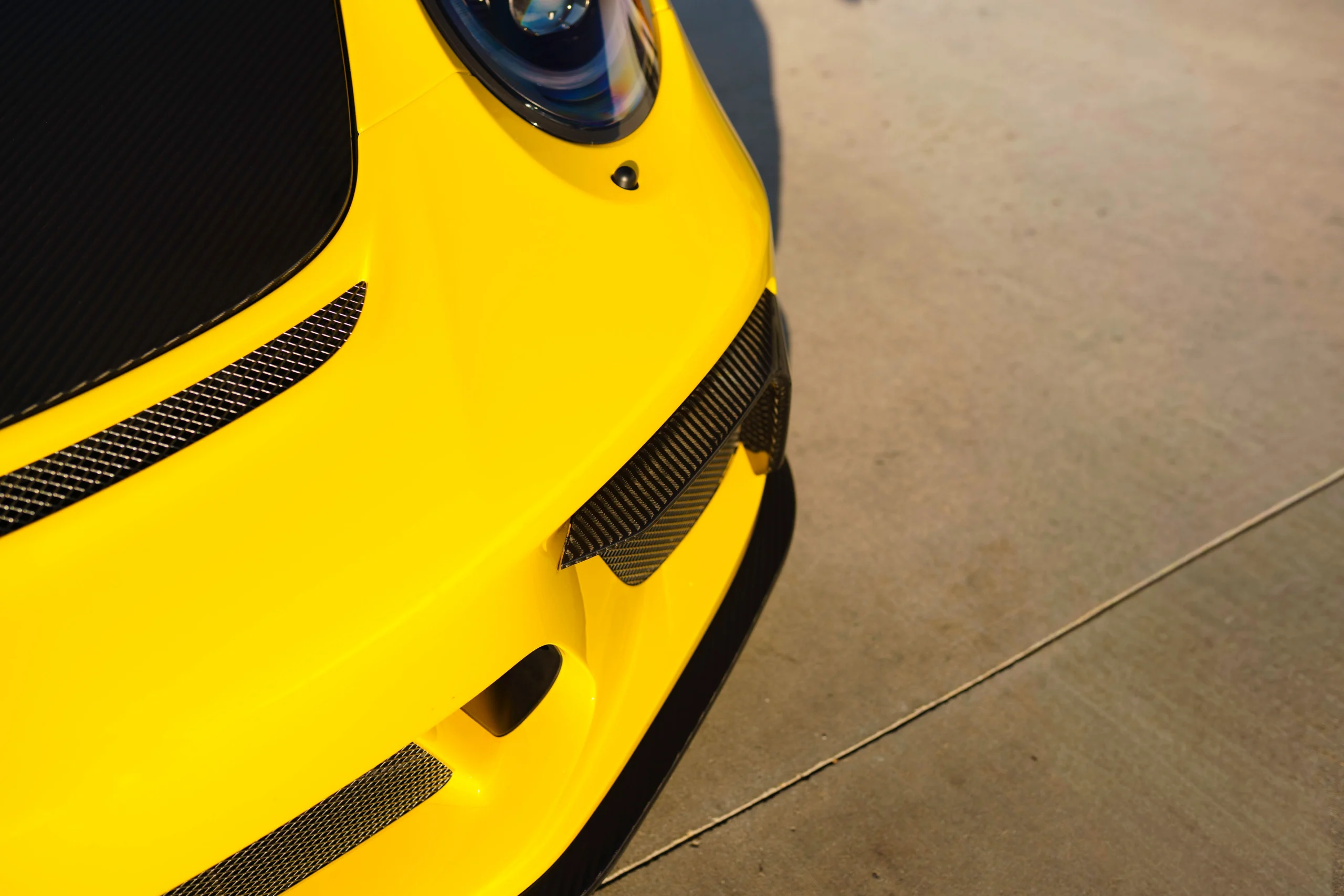
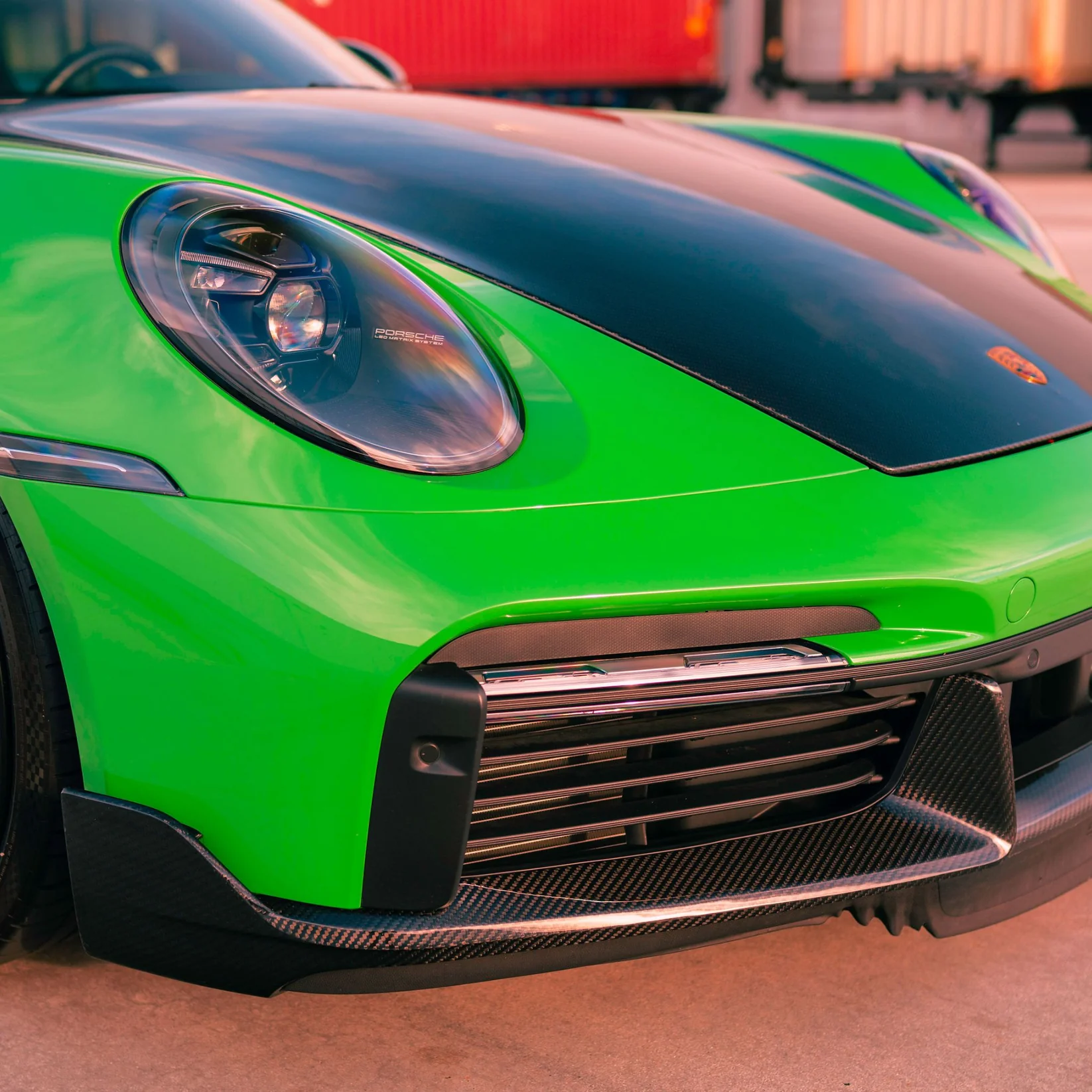
While no carbon fiber component can withstand a high-speed collision with concrete, the OG Carbon 992 Front Aero Spoiler is specifically engineered to handle the real-world flexural demands of street and track driving.
| 992 FRONT AERO SPOILER ENGINEERING HIGHLIGHTS | |
| FEATURE | TECHNICAL BENEFIT |
| Multi-Directional Pre-Preg Layup | Optimizes tensile flexibility under impact |
| Autoclave Density Consolidation | Eliminates weak points and resin voids |
| OEM Factory Mounting Integration | Uses factory clip/screw locations (No drilling) |
| Precision CAD Clearance Profiling | Maximize front downforce while keeping clearance |
| Applied Clear Protection | PPG UV High-Gloss clear coat finish |
By utilizing high-tensile unidirectional pre-preg carbon fiber layers oriented along specific load vectors, our engineers impart a calibrated degree of flexural elasticity into the splitter structure.
When subjected to minor scrapes or bottom-out forces, the OG Carbon Front Aero Spoiler absorbs and distributes energy across the entire panel face rather than concentrating force at the impact point.
Furthermore, our spoiler utilizes Porsche’s factory underside clip and mounting locations. This ensures that in the event of a severe impact, the spoiler releases cleanly from its factory hardware locations without tearing or damaging the underlying front bumper plastic.
“Can I upgrade my 992 engine cover to carbon fiber without trapping intercooler heat?”
The Problem
Modern turbocharged engines are sensitive to thermal management. The 992’s twin-turbocharged flat-six engine sits low in the rear chassis, packed tightly beneath cooling lines, intake plumbing, and electronic actuators.
To keep intake air temperatures (IATs) low during spirited driving or track sessions, Porsche engineers designed the factory plastic engine shroud to operate as an active air duct, sealing tightly against the underside of the rear decklid to route cold exterior air through the dual intercoolers.
| 992 ENGINE BAY THERMAL MANAGEMENT COMPARISON | |
| POORLY VENTED AFTERMARKET COVER | OG CARBON 992 TURBO CARBON ENGINE COVER |
| Uncalibrated scoop dimensions | CAD-molded to exact OEM intercooler dimensions |
| Traps radiant engine heat | High-temp pre-preg resin withstands 180°C+ |
| Causes thermal warping over time | Maintains structural rigidity under heat |
| Restricts intercooler air intake | Preserves factory intercooler intake velocity |
Many aftermarket carbon engine covers prioritize visual styling while neglecting thermal dynamics. Common design errors include:
- Misaligned Intake Seals: Improperly molded air scoops that create gaps around the intercooler shrouds, allowing hot engine bay air to recirculate back into the intake stream.
- Inadequate Resin Thermal Limits: Cheap resins that soften and warp when subjected to sustained engine bay temperatures exceeding 100°C (212°F).
- Heat Trapping: Thicker, unvented fiberglass-composite covers that act as thermal blankets, trapping heat around the top of the engine bay and degrading sensitive ignition and sensor components over time.
The Solution
The OG Carbon 992 Turbo Carbon Engine Cover provides a clean visual upgrade for the engine bay while maintaining proper thermal management.
Molded directly from a 3D laser scan of the OEM 992 engine bay, our cover matches factory mounting points and seals flush against intercooler air ducts. We utilize a high-Tg (glass transition temperature) epoxy resin matrix rated to withstand continuous temperatures of up to 180°C (356°F) without structural softening, surface hazing, or dimensional warping.
Intake air velocity remains uncompromised, allowing intercoolers to function at maximum cooling efficiency during intense driving.
Check out the OG Carbon blog on our 7 Critical Questions Before Upgrading.
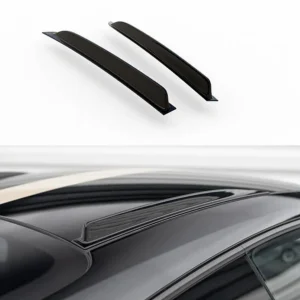
“Do GT3 RS style roof fins fit non-GT3 992 models, and how do they install?”
The Problem
The Porsche 992 GT3 RS introduced striking aerodynamic innovations, including dual roof-mounted vertical fins. These fins control airflow over the roofline, preventing hot engine air exiting the front radiator from mixing with the cool ambient air entering the rear top intake scoops.
Carrera, GTS, and Turbo owners often desire the aggressive motorsport look of these roof fins, but face major installation concerns:
- Incompatible Roof Contours: The GT3 RS features a specialized carbon roof skin with molded channels. Standard Carrera and Turbo metal or glass roofs feature different surface curvature, rendering original GT3 RS parts impossible to mount cleanly without custom body work.
- Permanent Damage Concerns: Owners are rightfully hesitant to drill holes into their factory aluminum, carbon, or glass roof panels to secure aftermarket aero bits.
- High-Speed Detachment Risks: Poorly fitted fins attached with cheap foam tape can detach under high aerodynamic loads at track speeds, posing a hazard to vehicles behind.
The Solution
OG Carbon offers a clean solution with our 992 Roof Fins, designed specifically for non-GT3 RS 992 models.
Our engineering team developed two distinct underside profiles:
- 3K GT3 RS OE Spec: A direct replacement for factory GT3 RS roof fins seeking exposed weave refinement.
- 6K Universal All-Fitment: Precision-contoured to match the roof curvature of standard 992 Carrera, GTS, and Turbo models (both solid and glass sunroof variants).
Installation requires zero drilling or permanent modifications. Each fin is secured using pre-cut, aerospace-grade 3M VHB (Very High Bond) acrylic adhesive tape.
When applied to a prepped surface, 3M VHB creates a permanent weather-resistant seal capable of withstanding high-speed aerodynamic drag and car washes, while remaining fully removable using heat and fishing line if the car is ever returned to stock condition.
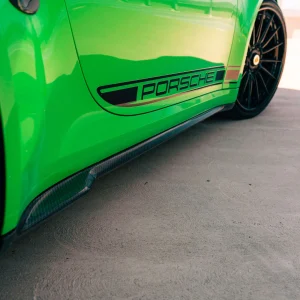
“How much body shop labor time should I budget for carbon fiber installation?”
The Problem
One of the most significant hidden costs of purchasing budget carbon fiber is body shop labor. Many enthusiasts purchase a $1,200 aftermarket carbon hood online, assuming they can bolt it on in their home garage over a weekend. However, when the part arrives, reality sets in:
Because cheap wet-layup parts deform as they cool outside of a mold, they arrive at body shops with twisted mounting flanges, misaligned latch locations, and uneven edges. Body shops must spend dozens of billable hours grinding down excess fiberglass, re-drilling bolt holes, filling voids with body putty, and using heat guns to force the part into shape.
Ultimately, the owner pays thousands of dollars in labor to make a cheap part fit, completely erasing any initial savings on the purchase price.
The Solution
At OG Carbon, our goal is true plug-and-play installation. By using 3D laser-scanned molds and autoclave pre-preg curing, our components maintain strict dimensional stability upon exiting the mold.
When an OG Carbon component – such as our 992 Side Rockers or Rear Diffuser – arrives at your home or body shop, it features factory-style mounting tabs, pre-drilled hardware holes, and exact edge contours.
Installation requires standard hand tools, taking hours off the fitting process and eliminating unexpected labor charges.
The OG Carbon Catalog Matrix for Porsche 992
For owners looking to build a cohesive, lightweight exterior package, OG Carbon offers a complete line of matched pre-preg components designed specifically for the Porsche 992 platform:
| OG CARBON COMPLETE 992 CATALOG | |
| COMPONENT | KEY ENGINEERING FEATURE |
| Bespoke 6K V-Weave Ducktail Spoiler | Active Aero Compatible / 6K V-Weave |
| Carbon Fiber Hood (GT3 / Carrera) | Ultra-Lightweight / Pre-Preg |
| Front Aero Spoiler (Turbo / Carrera) | Impact-Resistant / Factory Clip |
| Rear Diffuser Assembly | Direct OEM Replacement |
| Side Rocker Panel Set | Flush Body Line Fitment |
| Turbo Carbon Engine Cover | High-Temp Thermal Resistance |
| Roof Fin Set (3K GT3 RS / 6K Universal) | No-Drill 3M VHB Installation |
Investing in Precision
Upgrading a machine as refined as the Porsche 992 requires components built to the same engineering standards as the car itself. Choosing budget carbon fiber alternatives often leads to poor fitment, high body shop installation bills, ECU active aero faults, and resin yellowing over time.
By utilizing 100% autoclave pre-preg dry carbon fiber production, 3D laser scanning, and PPG UV-resistant clear coats, OG Carbon delivers composite components that preserve factory active aerodynamics, fit flush on the first attempt, and maintain optical clarity for years to come.
Explore our full catalog of Porsche carbon fiber upgrades and start your build today at OG Carbon Fiber.
Dive deeper into what makes OG Carbon special, in our Carbon Fever blog.