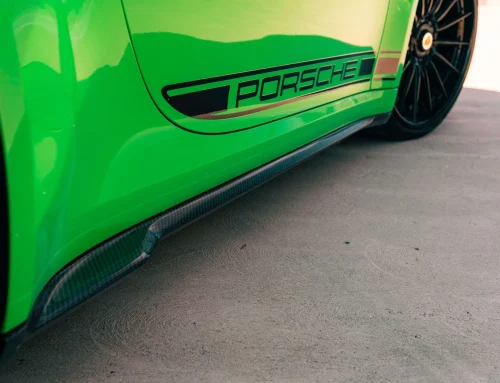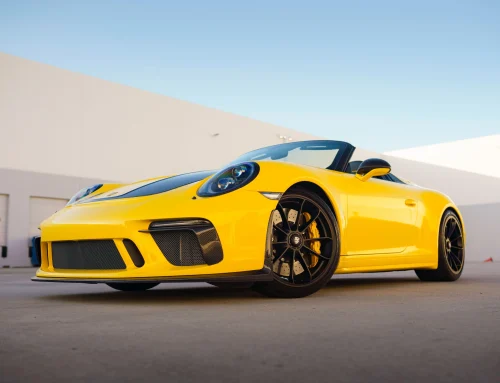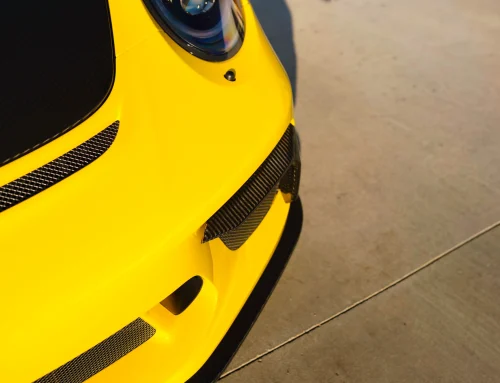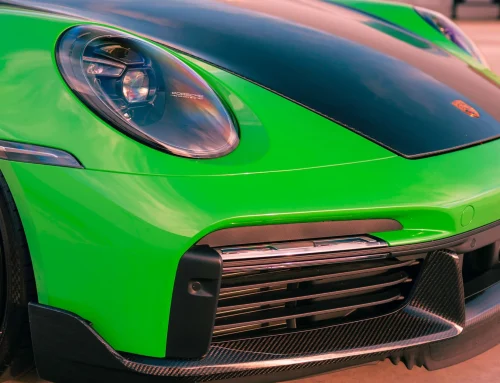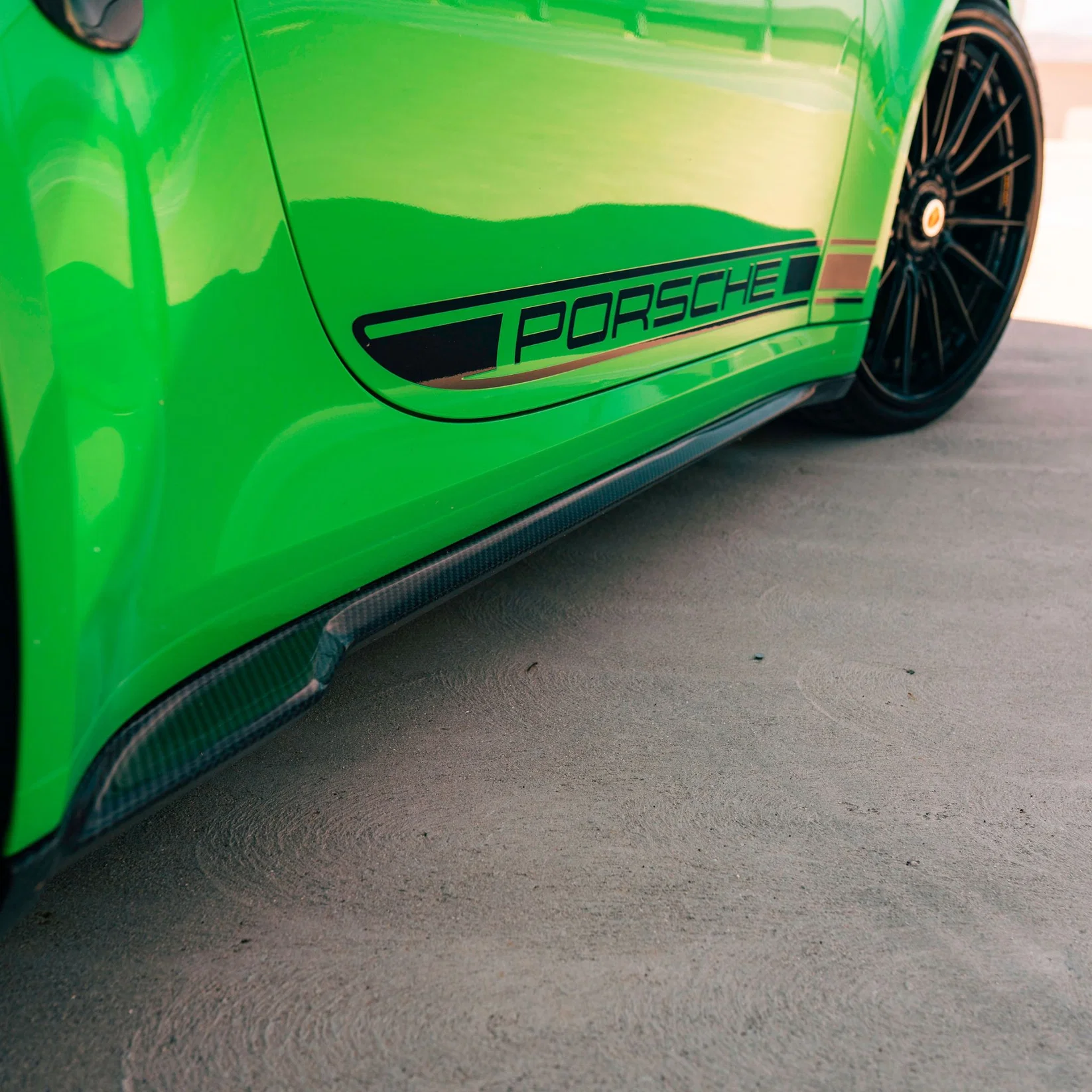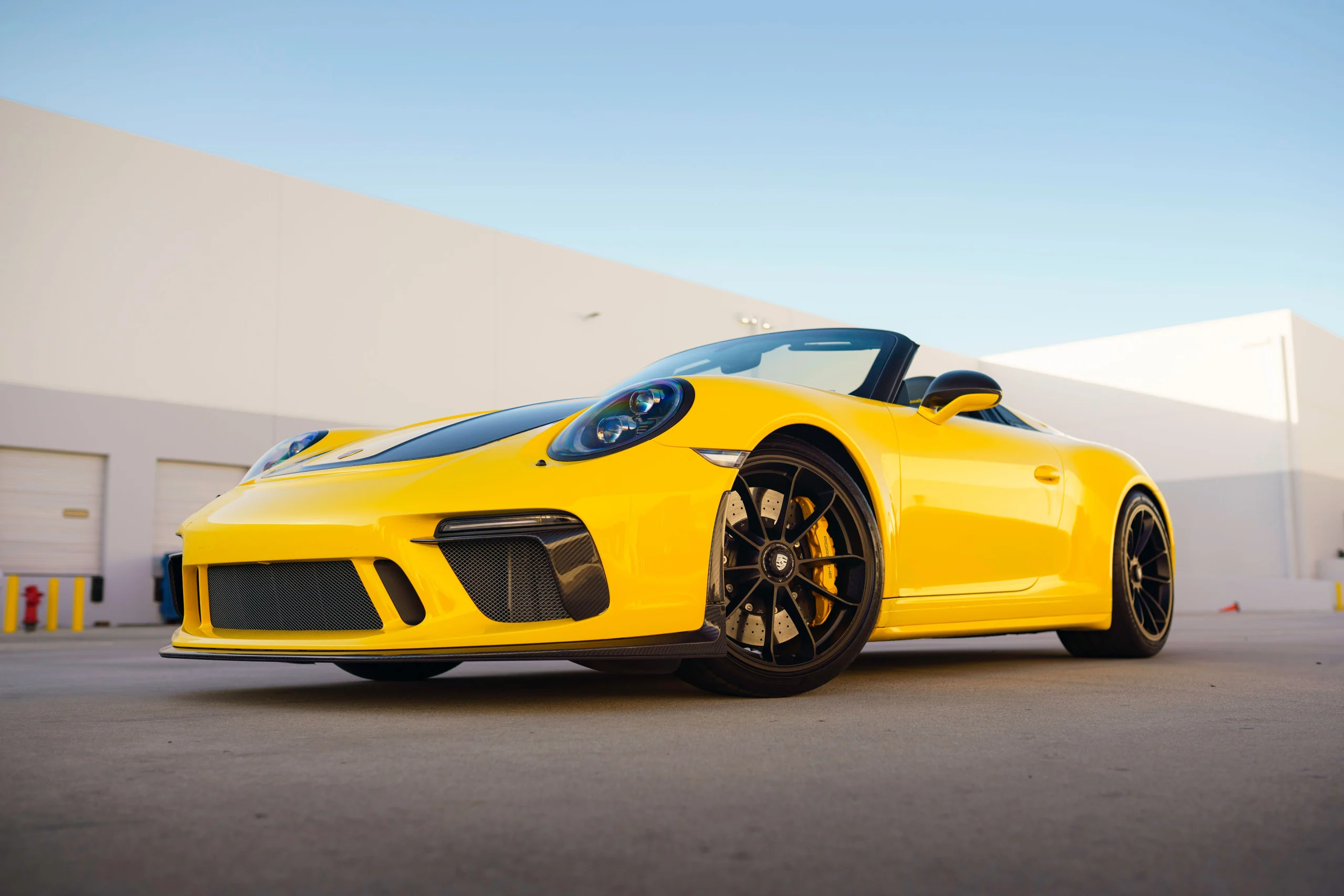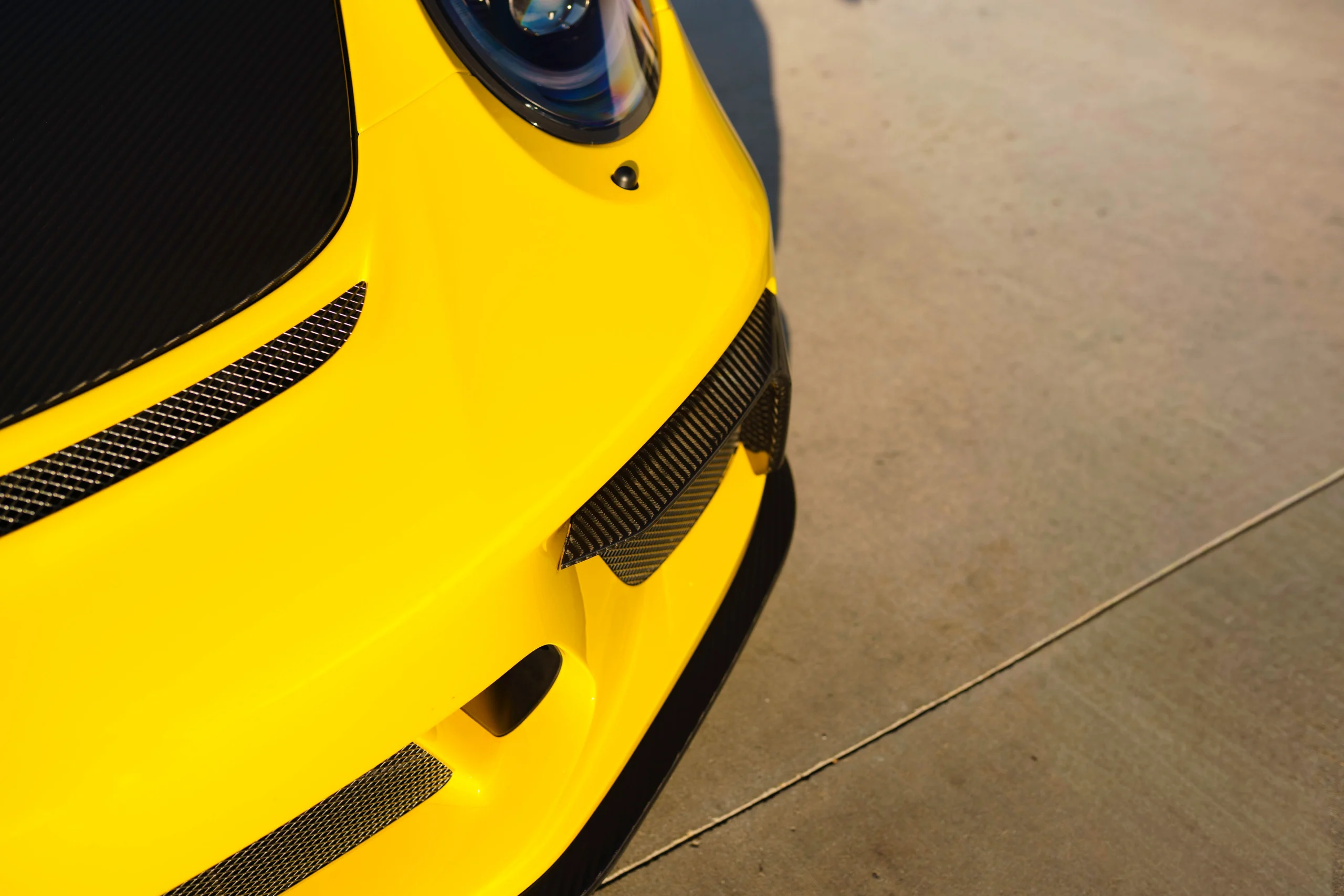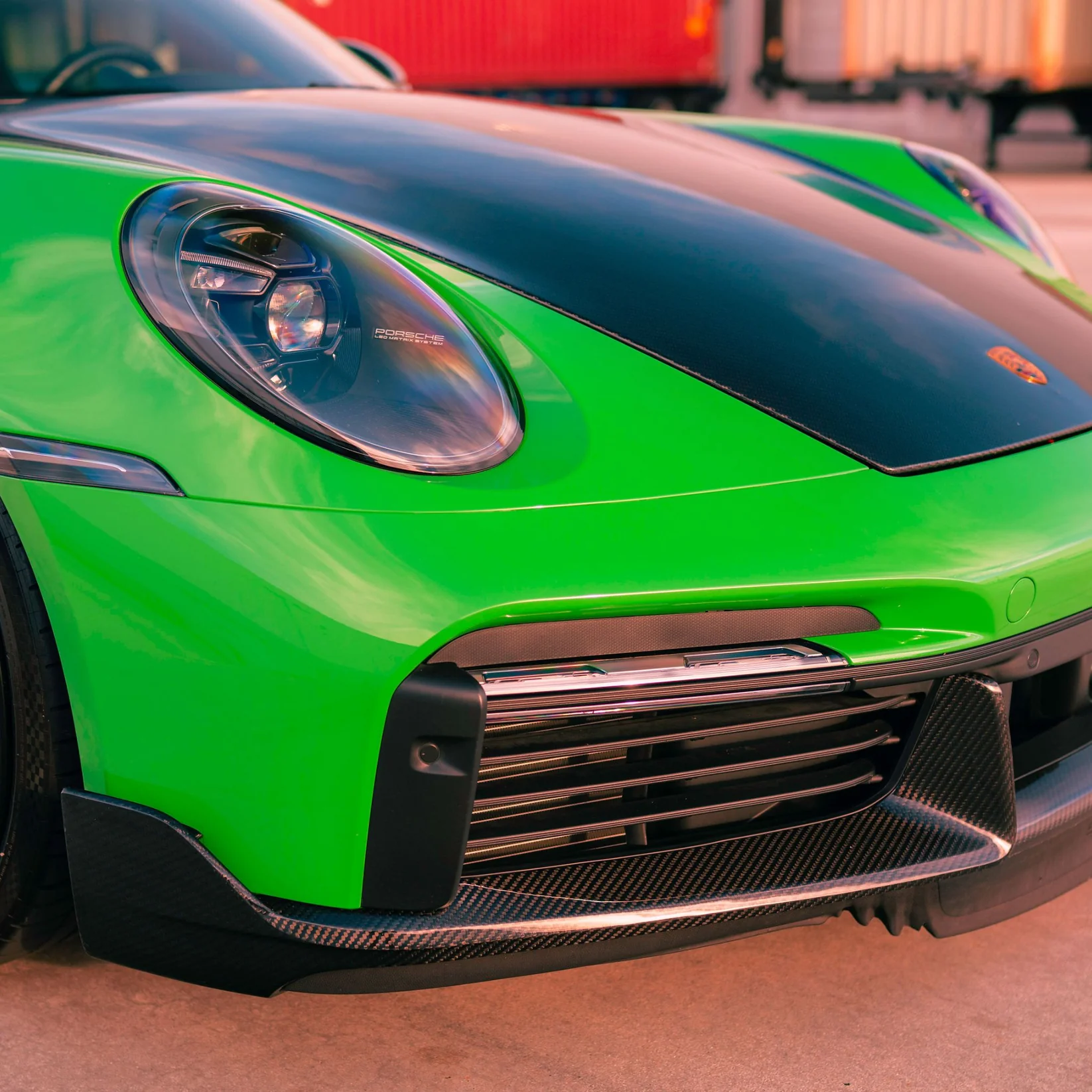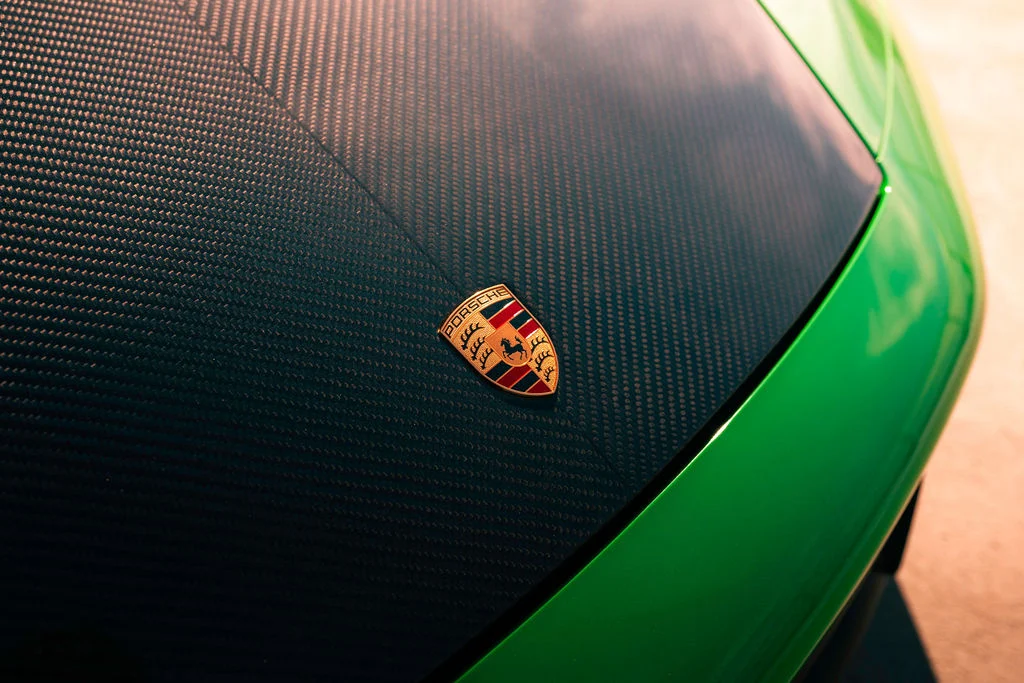
For owners of late-model performance icons like the Porsche 992 Turbo S or GT3, modifying a vehicle is an exercise in meticulous curation. Every modification added to a six-figure supercar must respect the factory engineering framework.
When evaluating aerodynamic upgrades – whether it is a more aggressive front splitter, a lightweight hood, or a heritage-inspired ducktail spoiler – you will inevitably encounter two terms that seem to dictate the entire aftermarket composite industry: Dry Carbon Fiber and Wet Carbon Fiber.
On a digital screen, two components from different brands can look visually identical. They might share the same glossy clear coat, the same 2×2 twill pattern, and the same aggressive automotive silhouette. Yet, one carries a price tag of $600, while the other commands $4,500.
This massive price delta is not an arbitrary luxury markup. It reflects a fundamental divergence in material science, structural engineering, manufacturing discipline, and long-term durability. For the automotive connoisseur, understanding the difference between wet and dry composites is the ultimate defense against ruining a high-performance build with sub-standard structural components.
What is Wet Carbon Fiber? (The Cosmetic Illusion)
To understand wet carbon fiber, it helps to view it not as a structural performance material, but as a cosmetic styling treatment. The wet lay-up method is the traditional, entry-level approach to working with fiber-reinforced polymers, and it remains the standard for budget-tier aftermarket body kits. It’s a lot of what you see for sale on eBay and Amazon.
The Wet Lay-Up Process
The manufacturing cycle for a wet carbon part begins with a manual mold. A composite technician sprays a clear gel coat into the mold, followed by a dry sheet of woven carbon fiber fabric. Using a handheld brush, roller, or spray gun, the technician manually applies a liquid epoxy or polyester resin directly onto the open fabric sheet at room temperature.
Using hand tools, the technician works the liquid resin into the cloth to saturate the fibers before leaving the part to air-dry and cure under ambient atmospheric conditions.
The Structural Realities of Wet Carbon
Because liquid resin is applied manually, achieving a precise, optimized ratio of fiber to resin is physically impossible. Human hands will always apply an excess volume of resin to ensure the cloth is fully saturated.
In the world of composites, excess resin equals dead weight. Resin provides the matrix to hold the fibers together, but the fibers themselves provide the actual structural strength. Wet carbon components are often thick, heavy, and structurally inefficient, frequently weighing nearly as much as the factory stamped steel or plastic panels they are designed to replace.
Furthermore, to keep production costs incredibly low, budget manufacturers routinely engage in a practice known as fiberglass backing. The component features a single, ultra-thin top layer of genuine carbon fiber purely for cosmetic presentation. Beneath that cosmetic veneer sit multiple layers of heavy, inexpensive, chopped-strand fiberglass drowned in black-dyed resin.
What is Dry Carbon Fiber? (The Aerospace Standard)
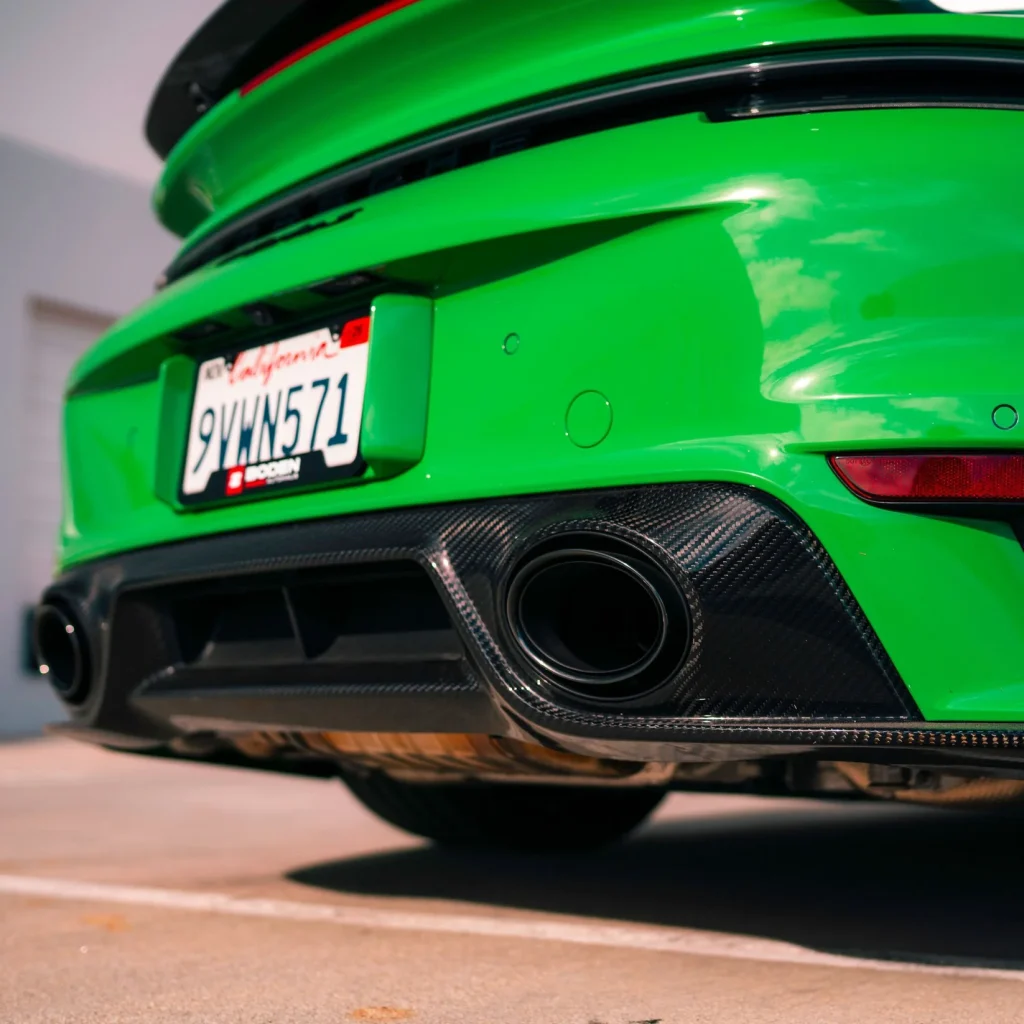
Dry carbon fiber represents the absolute pinnacle of composite manufacturing—a strict, uncompromised methodology adapted directly from the worlds of Formula 1, hypercar monocoques, and aerospace engineering.
The Pre-Preg Transformation
The defining characteristics of dry carbon fiber are born long before the material ever touches an automotive mold. It utilizes Pre-Preg carbon fiber, which stands for pre-impregnated composite sheets.
During the manufacturing of the raw textile at the mill, the carbon fiber strands are mechanically infused with a mathematically optimized, minimal volume of structural epoxy resin under strict laboratory conditions. The resin is chemically stabilized and kept in a frozen state until it is ready for layout, ensuring that the final material contains the exact weight distribution of fiber to resin required for maximum structural efficiency.
The Autoclave Factor
Because Pre-Preg resin is dry and stable at room temperature, it cannot cure under ambient conditions. The dry sheets are meticulously hand-layered into precision-milled tooling, sealed inside an airtight vacuum bag, and wheeled into an advanced autoclave pressure vessel.
Inside the autoclave, the component is subjected to an intense dual-activation cycle:
- Intense Thermal Energy: Temperatures are ramped past 250°F (121°C) to liquefy the stabilized resin, allowing it to flow completely uniformly across the microscopic carbon filaments.
- Multi-Atmospheric Pressure: The vessel is pressurized up to 100 PSI (6.8 bar), squeezing the composite layers together with immense force.
This high-pressure environment forces out any microscopic air pockets, voids, or excess resin mass. What emerges from the mold is a 100% pure, ultra-dense advanced carbon composite structure that feels bone-dry to the touch, possessing an unmatched strength-to-weight ratio.
Technical Comparison: Dry vs. Wet Carbon
To see how these two manufacturing philosophies stack up across critical automotive performance and aesthetic metrics, examine the technical breakdown below:
| Engineering Property | Wet Lay-Up Carbon Components | Pre-Preg Autoclave Dry Carbon |
| Material Composition | Liquid resin over dry cloth + fiberglass core | 100% factory-stabilized Pre-Preg carbon |
| Curing Environment | Ambient room temperature & atmospheric air | High-heat vacuum bag inside a pressurized autoclave |
| Resin-to-Fiber Control | Imprecise manual application (resin-heavy) | Mathematically optimized at the factory mill level |
| Mass Reduction Potential | Minimal (frequently matches factory panel weight) | Maximum (saves up to 60-70% over factory steel) |
| Micro-Void Formations | High risk (trapped air pocket bubbles) | Absolutely zero (eliminated via extreme pressure) |
| Structural Rigid Stability | Prone to panel deflection and highway vibration | Extreme torsional stiffness under high aero loads |
| Optical Weave Precision | Fibers shift and distort during hand brushing | Fibers stay locked in perfect geometric symmetry |
The Pitfalls of Wet Carbon on Modern Supercars
While a wet carbon part might look acceptable sitting on a stationary display table, installing it on a high-velocity machine like a Porsche 992 or a modern hypercar introduces severe long-term engineering failures.
Structural Deflection Under Aerodynamic Load
At speeds crossing into triple digits, aerodynamic components are subjected to massive downward pressures. Because wet-laid carbon-faced fiberglass lacks uniform density and internal structural rigidity, it is highly susceptible to structural deflection.
Under high speed, a wet carbon front splitter or rear wing will physically flex, ripple, and bow. This flexing distorts the aerodynamic profile of the vehicle, transforming an upgrade designed to reduce lift into an unstable surface that induces high-speed front-end vibration and unpredictable handling.
The Destructive “Yellowing” and Outgassing Effect
The room-temperature structural resins used in wet lay-up components are highly unstable when exposed to the thermal energy of high-performance engines and UV radiation from sunlight. Over time, solar heat causes the trapped solvents inside the wet resin to evaporate—a process known as outgassing.
Because these gas molecules cannot escape through the hardened cosmetic gel coat, they form a milk-like fog, clouding the part from the inside out. Simultaneously, the lack of chemical stabilizers causes the resin to turn a dull, sickly yellow, permanently ruining the clean look of the exposed weave.
The Nitrogen Advantage: Advanced Autoclave Chemistry
For elite composite houses looking to push past standard dry carbon manufacturing limitations, standard atmospheric autoclave processing is only the starting baseline. At OG Carbon, our commitment to engineering perfection has led to the integration of a highly specialized nitrogen generator curing process inside our autoclave vessels.
In a traditional autoclave cycle, the chamber is pressurized using compressed atmospheric air. At temperatures exceeding 250°F, the presence of ambient oxygen molecules induces a phenomenon known as micro-oxidation on the surface of the curing composite matrix. This oxidation can create microscopic structural degradation within the outer resin boundaries, affecting long-term finish clarity.
By deploying a dedicated nitrogen generation system, OG Carbon floods the pressurized autoclave chamber with an inert, 99% pure nitrogen atmosphere, completely displacing all oxygen molecules. Curing the pre-preg carbon matrix in an inert nitrogen bath prevents micro-oxidation entirely.
This advanced chemistry ensures that the cross-linking of the polymer chains achieves absolute maximum laminate density. The practical, real-world result is a finished component that displays uncompromised structural integrity, unparalleled thermal resistance, and a crystal-clear deep-plane foundation optimized for exposed-weave presentation.
The OG Carbon Philosophy: Porsche 992 Perfection
When managing the digital design and manufacturing cycles for our Porsche 992 Custom Parts Program, OG Carbon refuses to engage in the material shortcuts that define the mass-market aftermarket space. A vehicle engineered with the precision of a 911 requires an upgrade that matches or exceeds factory original equipment (OE) build standards.
Uncompromising Production Standards
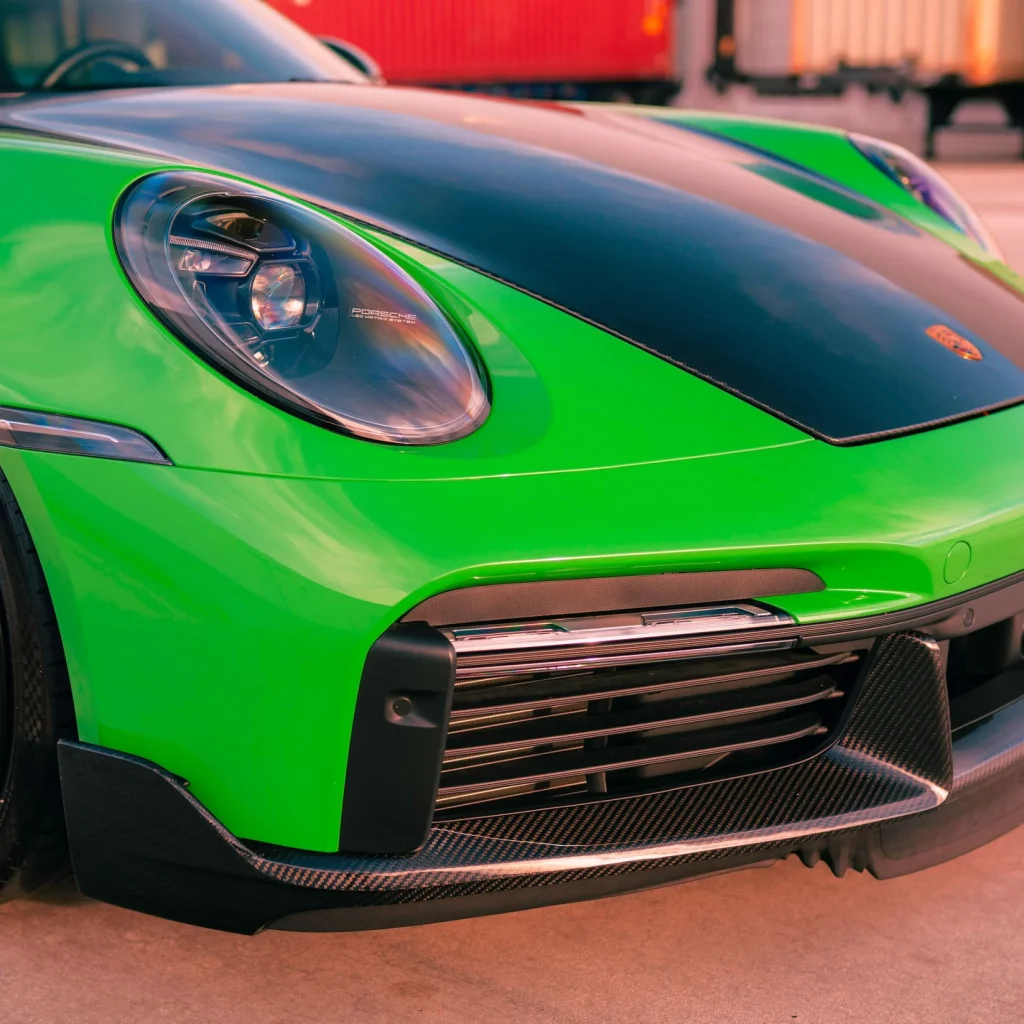
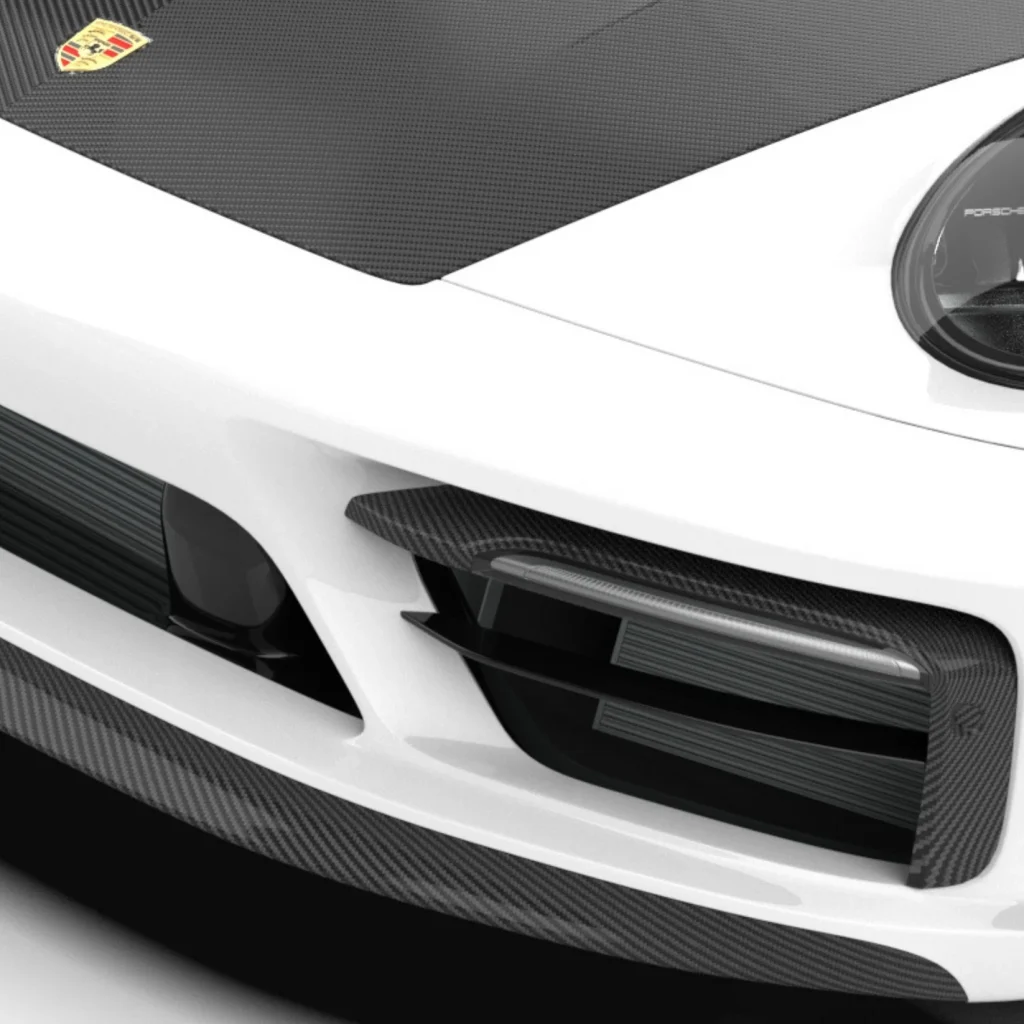
Every component in our catalog—from our Bespoke 992 Turbo Aero Kit to our aggressive rear diffusers – is manufactured using 100% pure autoclave pre-preg dry carbon fiber. We utilize a rigid Production Part Approval Process (PPAP) backed by ultra-precise 3D laser surface scanning of factory body tubs. This ensures that every mounting tab, clip location, and panel margin aligns flawlessly with your factory bumper and fenders, eliminating the crude trimming or drilling common with wet-laid alternatives.
| THE OG CARBON ADVANCED PRODUCT MATRIX | ||
| FACTORY MODEL | OGC DRY UPGRADE | MATERIAL FINISH OPTION |
| Porsche 992 Turbo/S | Bespoke Ducktail Spoiler | 6K V-Weave / 2×2 Seamless Symmetry |
| Porsche 992 Series | Full Carbon Front Hood | Autoclave Pre-Preg, Core Density Engineered, 2×2 V-Weave |
Visual Masterpieces: 6K V-Weave Alignment
Because our dry carbon manufacturing process locks the carbon filaments firmly in place under vacuum before heat is ever applied, we can execute complex, visually stunning weave patterns that are physically impossible to achieve with a wet lay-up setup.
Our signature 6K V-Weave option features a perfect chevron split where the weave lines mirror each other down the exact centerline of the component. This is the epitome of luxury upgrades.
Executed across large expanses like our Porsche 992 Bespoke Ducktail Spoiler, this requires laser-guided alignment templates and masterful hand-layering techniques. The result is a striking, uniform pattern without a single wavy line or distorted edge, transforming your vehicle’s aerodynamics into an expression of functional luxury art.
Elevate Your Next Project with OG Carbon’s Elite Composite Engineering
A high-performance build should never be compromised by cosmetic shortcuts. Wet carbon fiber components may offer an enticing entry-level price point, but their heavy fiberglass cores, structural instability under load, and rapid UV degradation make them a liability for premium automotive platforms. True dry carbon fiber, cured under nitrogen-pressurized autoclave environments, is the only material that honors the engineering heritage of the world’s finest vehicles.
At OG Carbon, we operate a state-of-the-art domestic-based 13,000 sq ft manufacturing facility dedicated to bringing aerospace-grade composite performance to elite custom restomods, luxury OEMs, and discerning retail collectors. Whether you want to purchase a showroom-quality upgrade from our custom Porsche 992 catalog or you are looking to collaborate on a full-scale custom carbon manufacturing project, our technical design collective is ready to deliver.
Connect with Our Technical Team
Ready to upgrade your vehicle’s performance and luxury profile with true, autoclave-cured dry composites? Contact the OG Carbon experts today to discuss your project specifications or custom retail parts inquiry.