The Modern Composite Landscape
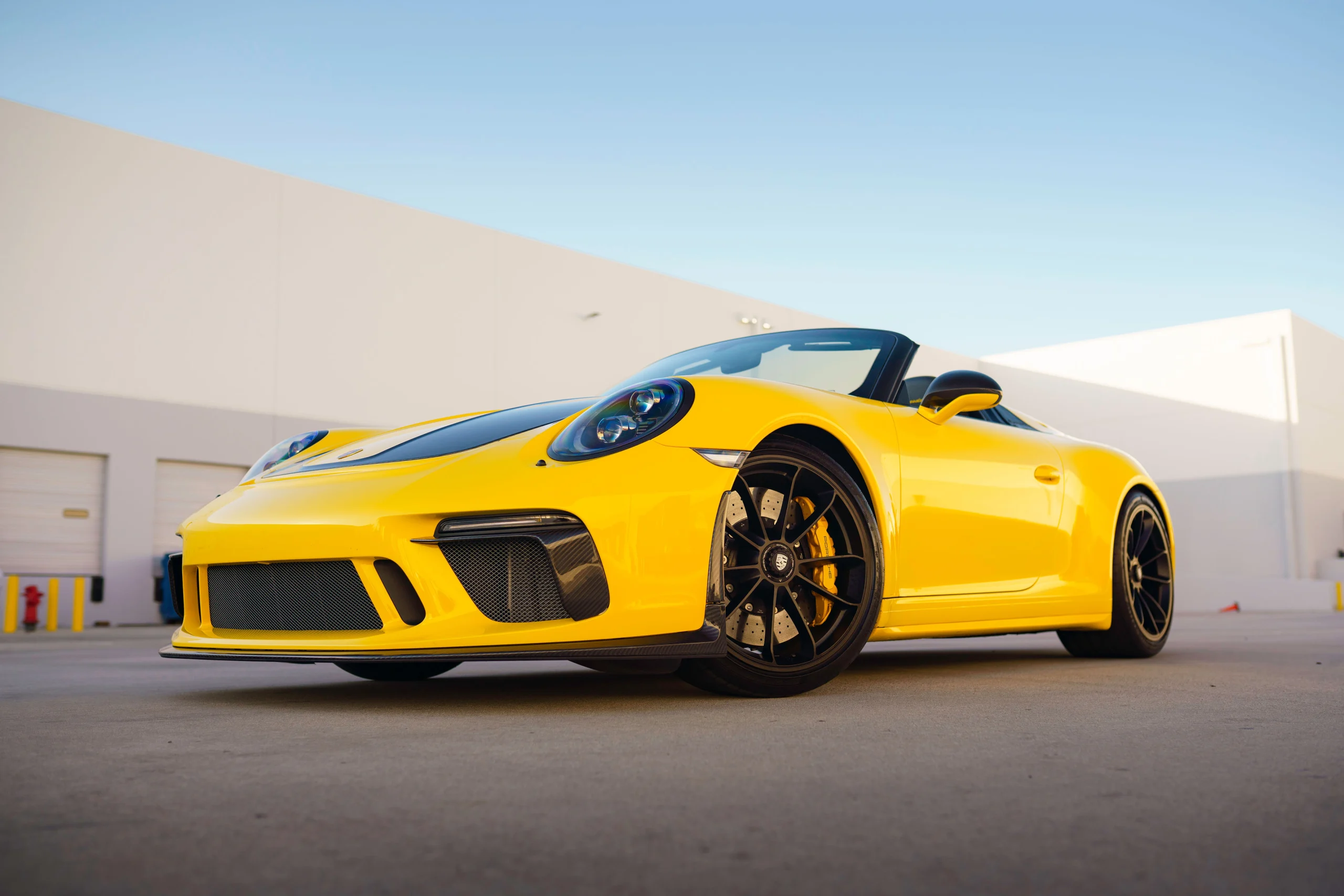
On high-performance Porsche platforms like the 992 GT3, GT3 RS, and Turbo S, carbon fiber is far more than an expressive accent – it is a functional extension of modern motorsport engineering.
Porsche’s Weissach development team designs these flagship sports cars with tight tolerances regarding aerodynamic balance, heat dissipation, and unsprung mass.
Adding composite components requires a clear understanding of composite manufacturing methods. The aftermarket is divided into two distinct construction philosophies:
| COMPOSITE MANUFACTURING PROCESS COMPARISON | |
| WET-LAYUP / FIBERGLASS HYBRID | AUTOCLAVE PRE-PREG DRY CARBON (OG CARBON) |
| Hand-brushed liquid resin | Pre-impregnated resin matrix (exact ratio) |
| Cured at ambient open-air pressure | Cured under 6+ ATM pressure @ 135°C+ heat |
| Heavy fiberglass (FRP) backing core | 100% dry carbon fiber skeleton and skin |
| Trapped air voids (5% – 12%) | Void-free consolidation (<0.1% air voids) |
| Warps under high engine heat | High thermal stability (180°C+ heat ceiling) |
Wet-Layup & Fiberglass Hybrids
Budget-tier components typically rely on wet-layup techniques. A thin cosmetic layer of carbon cloth is laid into an open mold, saturated with liquid polyester or low-grade epoxy resin, and reinforced with a heavy fiberglass (FRP) backing core. This is what you typically see offered on eBay, enticing you with low prices.
Because these parts cure at room pressure, microscopic air voids remain trapped inside the resin matrix. Over time, engine heat cycles and ultraviolet (UV) exposure expand these trapped air pockets, leading to surface hazing, structural warping, and resin yellowing.
Furthermore, the uncontrolled resin-to-fabric ratio in wet-layup manufacturing adds unnecessary dead weight. Instead of saving mass, wet-layup parts often match or exceed the weight of the factory aluminum panels they replace, defeating the purpose of upgrading to carbon fiber.
Check out our blog on the 7 critical questions you should be asking before upgrading.
Autoclave Pre-Preg Dry Carbon
In contrast, aerospace-grade components utilize pre-impregnated (pre-preg) dry carbon fiber. The epoxy resin ratio is precisely metered at the mill level during raw fabric production, eliminating excess weight and preventing resin pooling.
The laid-up carbon panels are sealed under vacuum and cured inside an autoclave under 6 atmospheres of pressure and elevated temperatures. This forces trapped air out of the matrix, yielding a dense, structural part that maintains dimensional stability under intense track conditions.
Learn more about dry carbon fiber vs. wet carbon fiber in the OG Carbon blog.

Visual Harmony & Weave Matching
A common challenge when upgrading GT3 or Turbo S models equipped with the factory Weissach Package is achieving visual consistency across all composite panels.
Mixing incompatible weave weights or mismatched surface coats creates visual disharmony that detracts from the car’s overall finish.
| OG CARBON SPECIFICATION & MATCHING MATRIX | |
| FACTORY WEISSACH STANDARD | OG CARBON CATALOG MATCH |
| 3K 2×2 Twill Weave Pattern | OE-Spec 3K 2×2 Twill Construction |
| Custom Accent Geometry | Bespoke 6K Chevron V-Weave |
| High-Gloss UV Protective Finish | Multi-Stage PPG High-Solids Gloss Clear |
| Low-Sheen Factory Satin Finish | Matte / Satin UV-Resistant Coating |
Weave Density & Geometry
Porsche factory composite options predominantly feature a 3K 2×2 twill weave (3,000 filaments per tow).
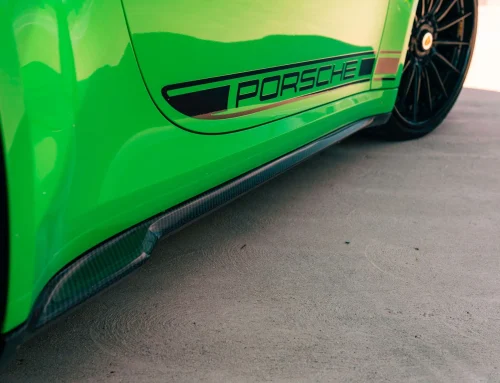
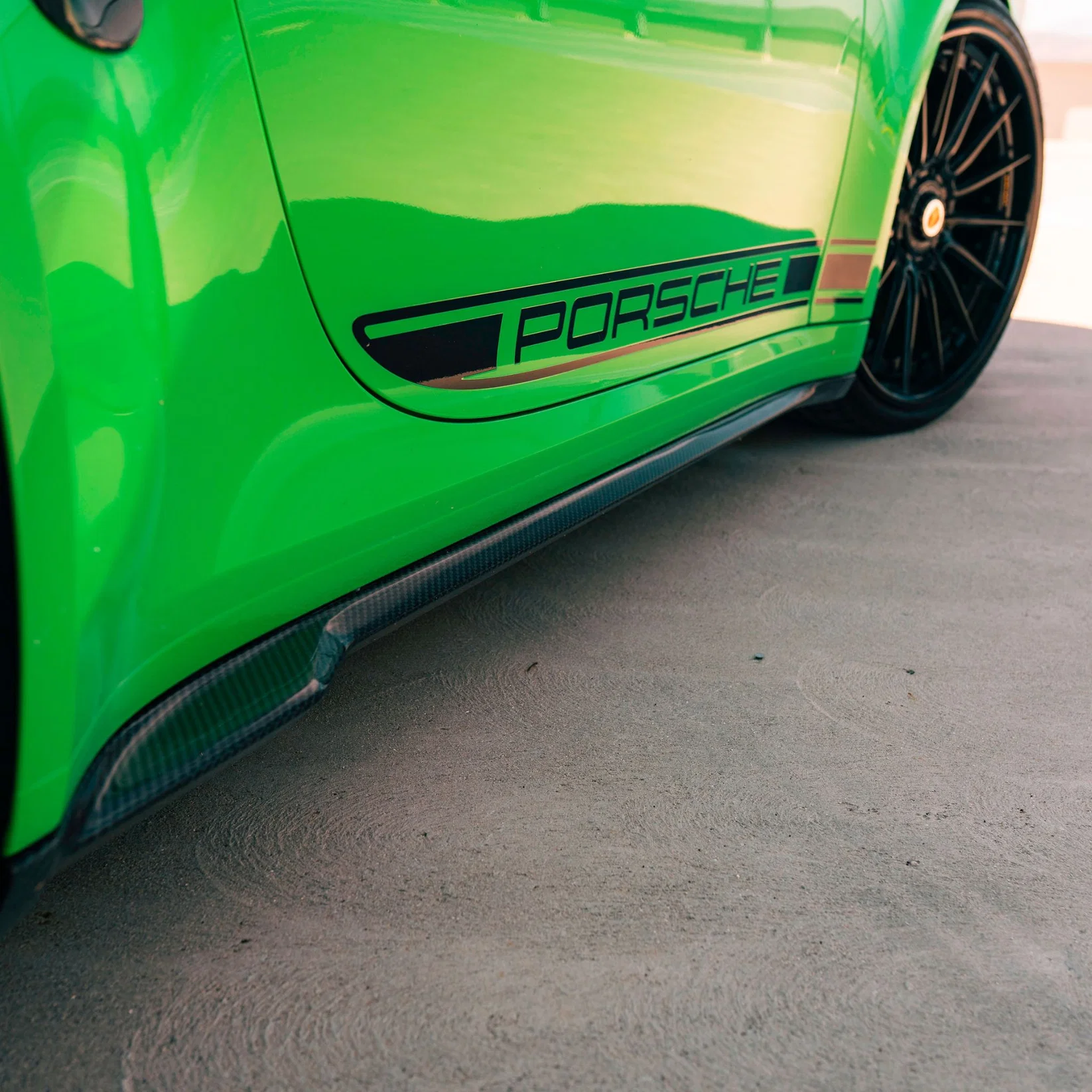
Many aftermarket parts use thicker 12K or plain-weave fabrics that clash with original equipment. To ensure a seamless look, OG Carbon components – including our 992 GT3 RS OE-Spec Carbon Roof Fins, Side Rockers, and Carbon Fiber Hood – are offered in exact OE-spec 3K 2×2 twill, as well as a custom 6K Chevron V-weave for standalone accent pieces like our Bespoke Ducktail Spoiler.
Aside from their sleek look, read here to learn about the aerodynamic impact that our carbon fiber parts have.
Clear Coat Optics
Surface finish is equally critical. Factory carbon components are offered in either a High-Gloss or low-sheen Satin finish. Every piece in the OG Carbon lineup is finished with automotive-grade PPG UV-resistant clear coat, formulated in both High-Gloss and Satin options to ensure an exact match with factory Weissach trim.
Thermal Management & Track Durability
The rear axle of a 992 Turbo or GT3 operates in a punishing thermal environment. Exhaust gases exiting the tailpipes can reach temperatures exceeding 600°C (1,100°F), while top-mounted intercoolers require a continuous flow of cool ambient air.
Heat Resistance & Structural Stability
Low-grade resins used in wet-layup diffusers soften when exposed to sustained exhaust radiation, leading to structural sag, clear coat cracking, and yellowing near the exhaust tips.
OG Carbon uses high-glass-transition-temperature (high-Tg) epoxy matrices across all high-heat components – such as our 992 Rear Diffuser and 992 Turbo Carbon Engine Cover. Rated to a continuous operating limit of 180°C (356°F), these components withstand intense heat cycles without structural degradation or thermal discoloration.
Debris Impact & Paint Protection Film (PPF) Adhesion
Lower side skirts and rear diffuser strakes take direct hits from gravel, tire marbles, and road debris flung by sticky track tires like Michelin Pilot Sport Cup 2R and 4R or Pirelli Trofeo RS.
OG Carbon’s PPG high-solids clear coat creates a cross-linked chemical bond over the carbon matrix. This provides impact resistance against track debris while creating a durable surface for applying, heat-stretching, or removing Paint Protection Film (PPF) without the risk of clear coat peeling or delamination.

Mass Optimization & Unsprung Performance
In high-performance automotive engineering, not all mass is created equal. Removing weight from the highest points of the chassis lowers the center of gravity, while reducing unsprung mass yields dynamic handling improvements.
| HOOD MATERIAL & MASS COMPARISON MATRIX | |
| COMPONENT VARIANT | MATERIAL CONSTRUCTION & STRUCTURAL PROFILE |
| Factory OEM 992 Hood | Pressed Aluminum Outer Skin & Inner Frame |
| Budget Composite Hood | Thin Carbon Layer + Heavy Fiberglass Backing |
| OG Carbon Pre-Preg Hood | 100% Autoclave Dry Carbon (Skin + Skeleton) |
Front Axle Mass Reduction
Swapping an aluminum hood for a composite unit is a common upgrade, but budget carbon hoods featuring fiberglass backing layers often weigh more than the factory aluminum hood.
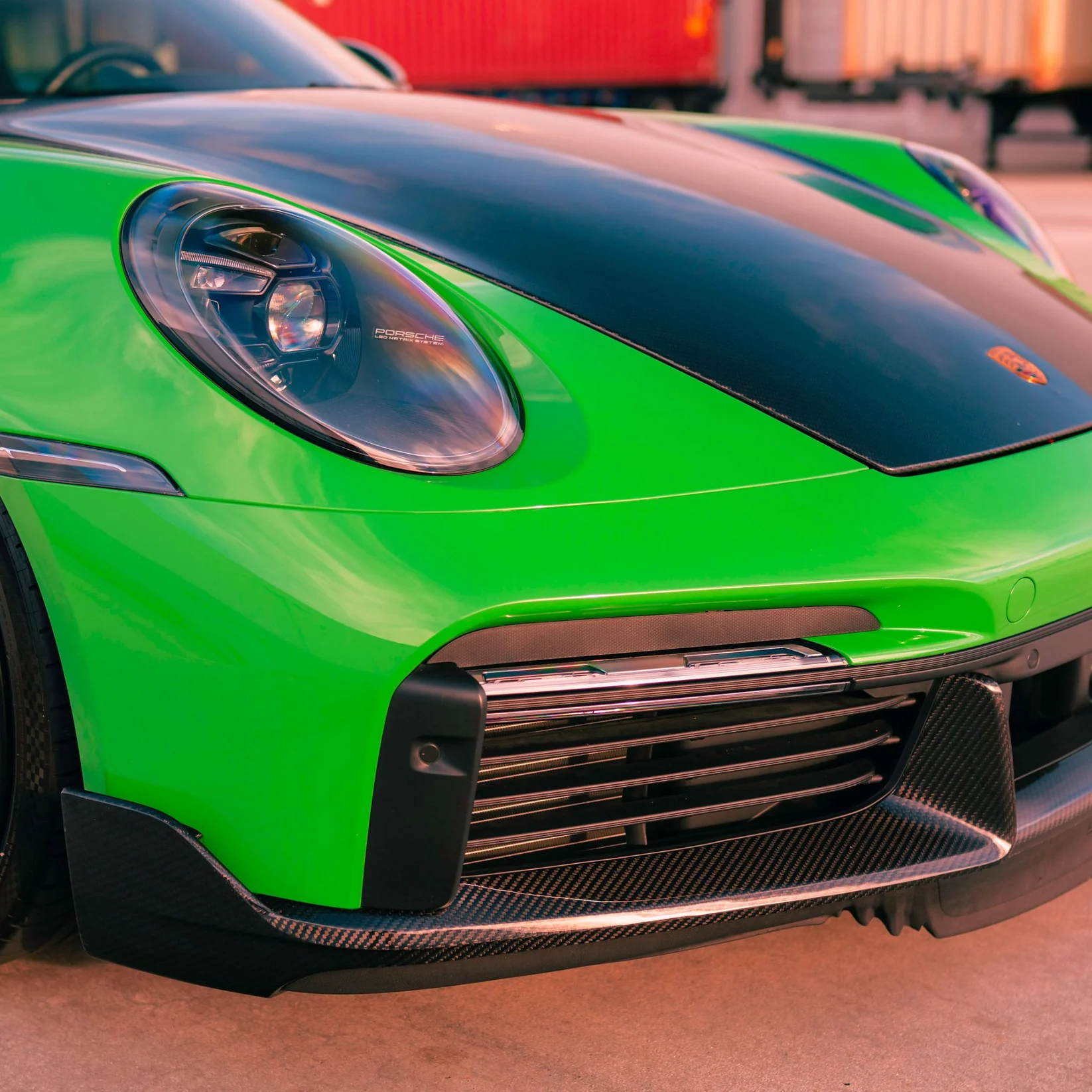
The OG Carbon 992 Carbon Fiber Hood uses 100% dry carbon construction for both the outer skin and the inner structural skeleton. By eliminating heavy fiberglass reinforcement, it reduces hood mass by ~45% compared to stock aluminum, lowering front-axle weight and improving turn-in response.
Check out our blog on Losing Mass Where it Matters and the performance impact of carbon fiber.
Preserving Resale Value & OEM+ Integration
For owners of limited-production Porsche sports cars, preserving vehicle value and factory warranty coverage is a top priority. Permanent chassis modifications – such as drilling into aluminum panels, modifying bodywork, or altering wiring harnesses, can negatively impact valuations on enthusiast auction platforms like Bring a Trailer or PCARMARKET.
| REVERSIBLE OEM+ HARDWARE INTEGRATION | |
| PERMANENT MODIFICATIONS (BUDGET) | OG CARBON OEM+ INTEGRATION |
| Drilling into aluminum body panels | 3D CAD scanned to match factory bolt holes |
| Cutting factory bumper supports | Direct bolt-on using original hardware |
| Unplugging/splicing active aero | Preserves active aero electronics logic |
| Irreversible structural damage | 100% reversible back to stock configuration |
OG Carbon components are designed for 100% reversible OEM+ installation. Using 3D optical scans of factory Porsche 992 chassis geometry, our components – including the 992 Front Aero Spoiler, Side Rockers, and Roof Fins – utilize original equipment mounting points, factory clip channels, and existing hardware locations.
This precision fitment eliminates the need for body shop modifications and ensures the car can be returned to its factory configuration whenever desired.
Interested in preservation through modifications? Read the OG Carbon ultimate guide to reversible Porsche 911 modifications.

Frequently Asked Technical Questions (FAQ)
1. “Why do some carbon fiber parts turn yellow or cloudy over time?”
Yellowing and cloudiness occur when cheap gelcoats or wet-layup resins break down under UV light and heat cycles. Open-air cured carbon traps tiny air bubbles that expand under solar heat, fracturing the surface and creating a milky haze.
OG Carbon uses 100% autoclave pre-preg dry carbon cured under 6 atmospheres of pressure, paired with automotive-grade PPG UV-resistant clear coats that permanently block UV degradation.
Read the OG Carbon blog on Why Cheap Carbon Fiber Costs More in Body Shop Labor.
2. “How do OG Carbon GT3 RS Roof Fins mount without drilling into the roof panel?”
Our 992 Roof Fins use automotive-grade 3M VHB (Very High Bond) acrylic adhesive tape. Designed to match the roof curvature of Carrera, GTS, and Turbo models, these fins install cleanly without drilling or body modifications.
They remain rock-solid at track speeds while remaining fully removable using heat and fishing line if you return the car to stock.
3. “Can my local body shop install OG Carbon parts, or do they require specialized trimming?”
Because all OG Carbon parts are molded from 3D laser scans of factory Porsche 992 bodywork, they feature 1:1 OEM bolt-on fitment. Budget wet-layup parts often require 10 to 20+ hours of body shop labor for trimming, grinding, and reshaping. OG Carbon components install directly using factory hardware locations, reducing installation time to standard plug-and-play labor.
4. “What is the difference between wet carbon and dry carbon fiber?”
Wet carbon is manufactured by brushing liquid resin over raw carbon cloth in an open mold, often backed with fiberglass. It is heavier, less structurally rigid, and prone to heat distortion.
Dry carbon (pre-preg) uses carbon cloth pre-impregnated with a precise resin ratio, vacuum-sealed, and cured inside an autoclave under high heat and pressure. The result is a lighter, stronger component with a flawless surface finish.
5. “How do high exhaust temperatures affect the OG Carbon Rear Diffuser on GT3 and Turbo models?”
Exhaust gases on GT3 and Turbo S models can exceed 600°C (1,100°F), which softens low-grade resins and causes structural sag or yellowing near tailpipes.
The OG Carbon 992 Rear Diffuser is built using a high-glass-transition-temperature (high-Tg) epoxy resin matrix rated to continuous operating temperatures of 180°C (356°F)+, ensuring long-term structural integrity under heavy track use.
For more FAQs like these, check out the OG Carbon blog: The Complete Porsche 992 Carbon Fiber FAQ.
Complete 992 Platform Catalog
Below is the complete engineering matrix for OG Carbon’s Porsche 992 composite line:
| OG CARBON 992 PRODUCT MATRIX | |
| COMPONENT | KEY TECHNICAL FEATURE |
| Bespoke 6K V-Weave Ducktail Spoiler | Active Aero Retained / 6K Weave |
| Carbon Fiber Hood (GT3 / Carrera) | -45% Weight vs. Stock Aluminum |
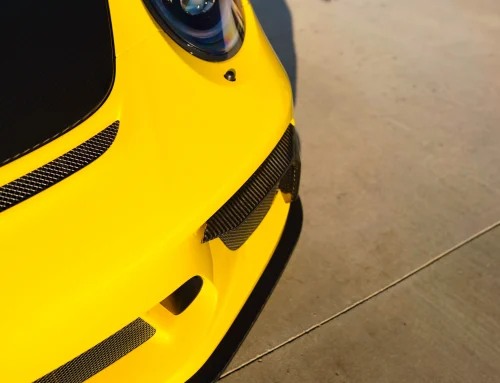
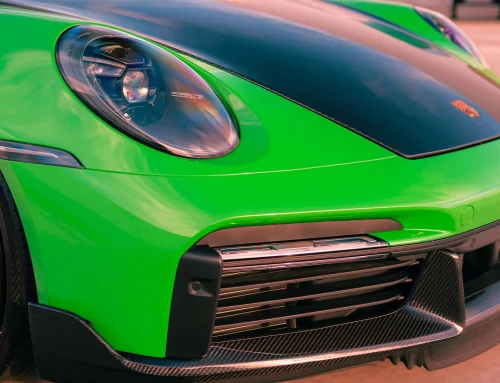
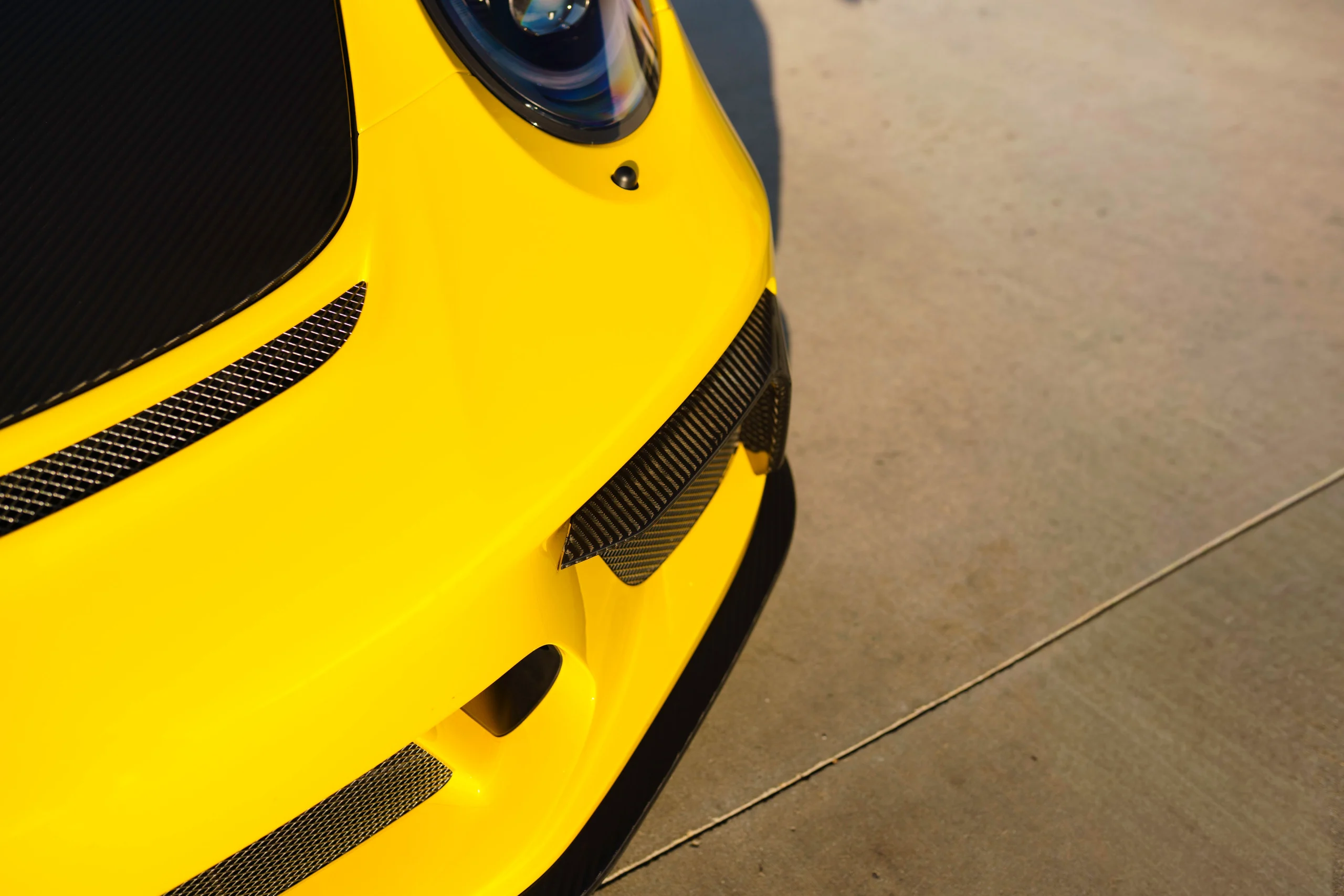
| Front Aero Spoiler (Turbo / Carrera) | Autoclave Flexural Durability |
| Rear Diffuser Assembly | 180°C High-Tg Heat Resistance |
| Side Rocker Panel Set | Direct OEM Bolt-On Alignment |
| Turbo Carbon Engine Cover | High-Temp Intercooler Sealing |
| Roof Fin Set (3K GT3 RS / 6K Universal | No-Drill 3M VHB Installation |
Upgrading a modern Porsche GT3, GT3 RS, or Turbo S requires a commitment to engineering precision.
By choosing autoclave pre-preg construction, high-Tg resins, OE-matching weave finishes, and direct bolt-on fitment, OG Carbon delivers composite solutions that perform on track while preserving the long-term value of your vehicle.
Explore the complete collection at OG Carbon Fiber, and read our other pieces in the Carbon Fever blog.