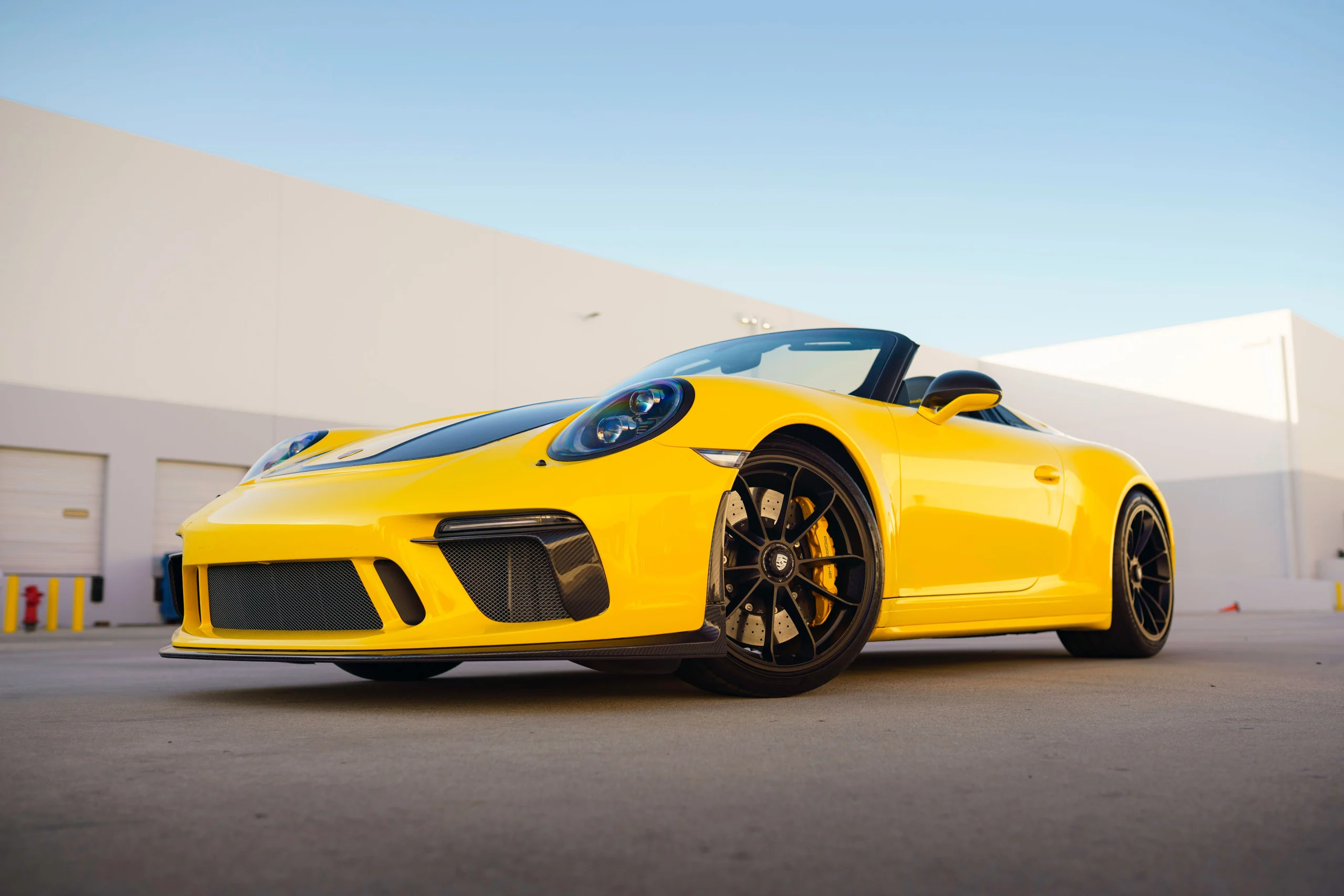
In the world of Porsche collecting, there is a distinct hierarchy of “Special Editions.” There are the mass-produced icons, the track-bred RS models, and then there is the Speedster.
Produced in a strictly limited run of just 1,948 units — a deliberate tribute to the year the 356 “No. 1” Roadster first touched the tarmac — the 991.2 Speedster is not merely a car; it is a mechanical closing argument for the 991 generation.
For the serious discerning collector, the Speedster represents the perfect intersection of GT3 performance and open-air heritage. Powered by the 9,000-rpm, 4.0L naturally aspirated flat-six and offered exclusively with a six-speed manual transmission, it is the ultimate purist’s tool.As market values for these examples solidify in the $500,000 range, the philosophy regarding ownership has shifted. Stewardship of a Speedster requires a delicate balance: the desire to drive and enjoy the vehicle versus the responsibility of maintaining its investment-grade condition.
At OG Carbon, we believe that refinement and preservation are not mutually exclusive. This guide explores the nuances of the 991.2 Speedster platform and how the OEM+ philosophy can be applied to a car of this rarity without compromising its historical or financial provenance.
The Heritage of the Speedster Nameplate
To understand the 991.2, we must turn the clocks back to the 1950s. The original 356 Speedster was born from a request by Max Hoffman, Porsche’s legendary U.S. importer, who wanted a stripped-down, lower-cost racer for the American market. What started as a “budget” Porsche became an icon of minimalist design.
The 991.2 Speedster honors this by stripping away the unnecessary. It features a shortened windshield frame (lowered by 50mm) and smaller side windows, creating a “low-slung” profile that is unmistakable. However, unlike the 356, the 991.2 is a carbon fiber powerhouse. Its front fenders and the iconic rear decklid are made of Carbon Fiber Reinforced Plastic (CFRP), making it one of the most material-advanced Porsches ever produced in 2018.
The Significance of 1,948 Units
The production number isn’t just marketing; it dictates the secondary market. With fewer than 2,000 units globally, each car is a “blue chip” asset. Any modification made to the car must be viewed through the lens of a curator. If a component isn’t of the same aerospace grade as the factory’s CFRP, it is a downgrade.
The GT3 DNA: A Masterclass in Atmospheric Power
Beneath the heritage-inspired silhouette, the Speedster is effectively a GT3 Touring with the roof removed. It utilizes the chassis of the 991.2 GT3 and the 502-hp engine from the GT3 RS, complete with individual throttle bodies that improve throttle response while creating an amazing tone.
The Manual-Only Mandate
By offering the Speedster exclusively with a six-speed manual gearbox, Porsche sent a clear message: this car is for drivers who value engagement over lap times. This analog nature makes it a “forever car.” While PDK-equipped cars may be faster on paper, the manual Speedster will always hold a higher premium in the eyes of collectors who prioritize the “Last of the Mohicans” era of naturally aspirated, manual Porsche GT cars.

The Science of Material Integrity: Dry Carbon vs. The Asset
When dealing with a $500,000 vehicle, the aftermarket market is full of risks. Many owners are tempted by Wet Carbon accessories that are simply overlays or low-grade fiberglass. On a Speedster, these are catastrophic for resale value.
The Autoclave Standard
At OG Carbon, our 991-platform components are manufactured using the Pre-Preg (Dry) Carbon method. The carbon fiber is pre-impregnated with resin, placed into vacuum-sealed bags, and cured in an autoclave.
Why this matters for collectors:
- UV Stability: High-value cars often sit in collections or attend high-end outdoor events. Our aerospace-grade resins prevent yellowing and clear-coat fogging, which is common in cheaper carbon.
- Weight Neutrality: The Speedster was designed with extreme weight-saving measures. Our dry carbon parts are up to 40% lighter than factory plastic, ensuring the car’s power-to-weight ratio is actually improved, not hindered.
- Dimensional Precision: Because dry carbon doesn’t warp during the cooling process, the fitment is within 0.1mm of the factory body panels.
The OEM+ Approach: Non-Invasive Refinement
The primary concern for Speedster owners is: “Will this affect my car’s provenance?” The goal is to make the car look like it was a special request from Porsche’s Exclusive Manufaktur, rather than a modified vehicle. Our client who owns the 991.2 Speedster thoroughly believes that this surely does add provenance and collectibility.
Pillar I: Total Reversibility
We operate on a “no-trace” policy. Every OG Carbon component for the 991.2 platform utilizes factory mounting points and OEM hardware. There is no drilling into the CFRP body and no permanent adhesives used. This means that if the car ever goes to a premier auction house like RM Sotheby’s or Gooding & Co, it can be returned to 100% factory-stock condition in a single afternoon.
Pillar II: Weave Continuity
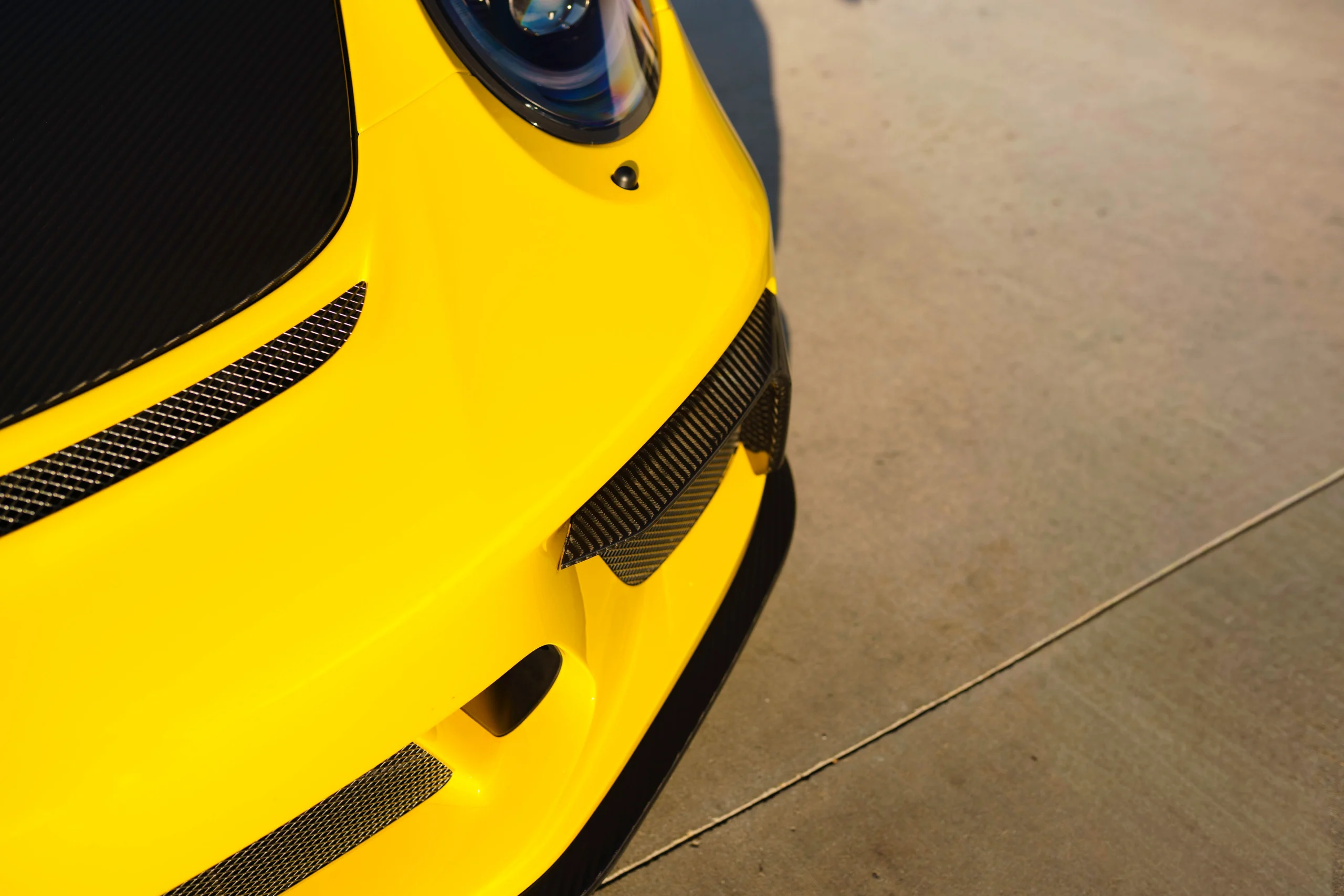
Porsche’s factory carbon fiber — specifically on the rear decklid and interior trim, follows a precise 3K Twill direction. To maintain a cohesive look, any additional carbon elements must match this weave perfectly. A mismatched weave direction is a tell-tale sign of an aftermarket part; a matched weave is a sign of a professional commission. Notice our bespoke Speedster hood is featured in a 6K V-Weave pattern which really sets it apart from the pack.
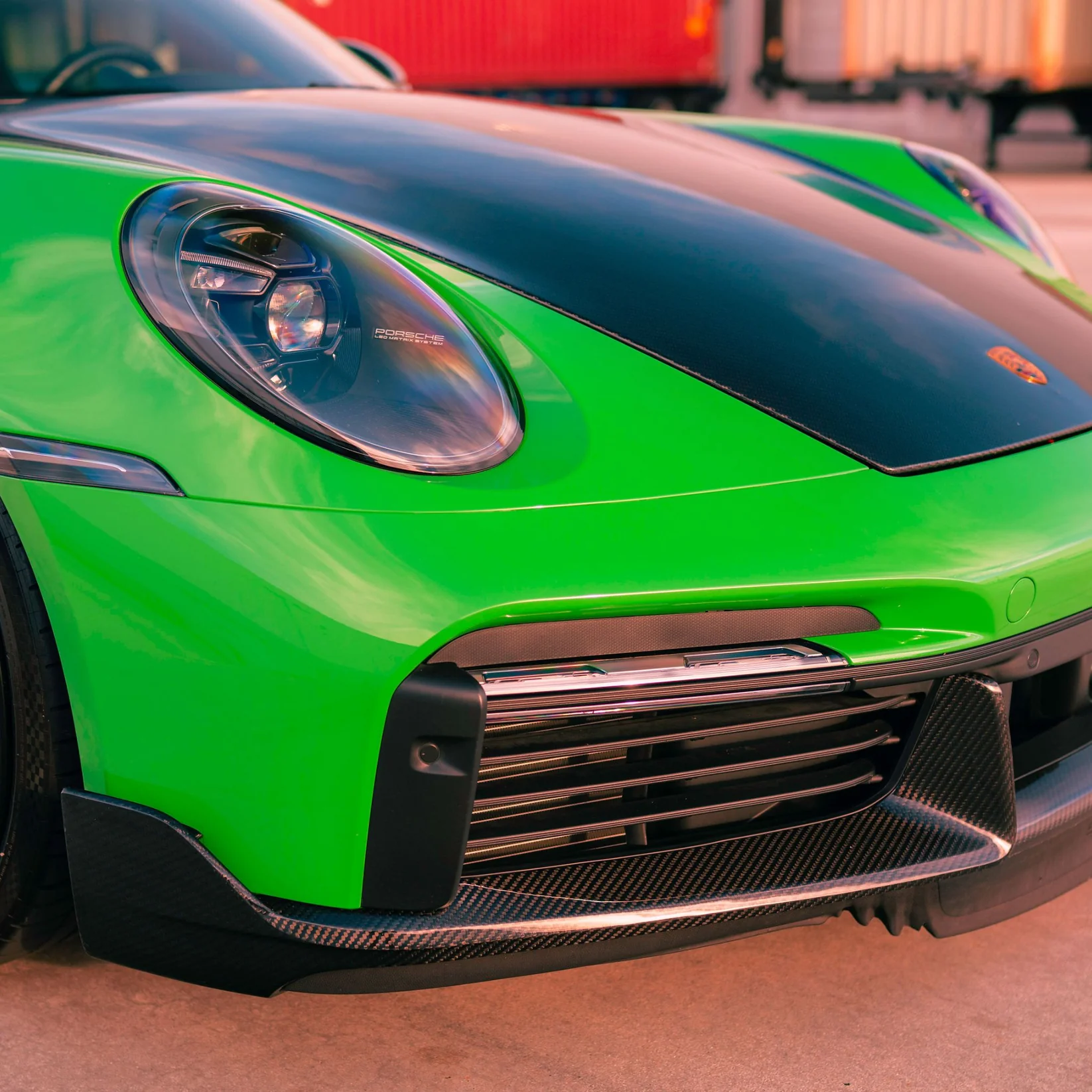
Check out OG Carbon’s ultimate guide on OEM+ evolution for your Porsche 992.
Identifying the Opportunity: Targeted Refinements
Despite the Speedster’s perfection, there are areas where the factory had to balance production costs. These areas provide the opening for OEM+ refinement:
A. The Front Aero Package
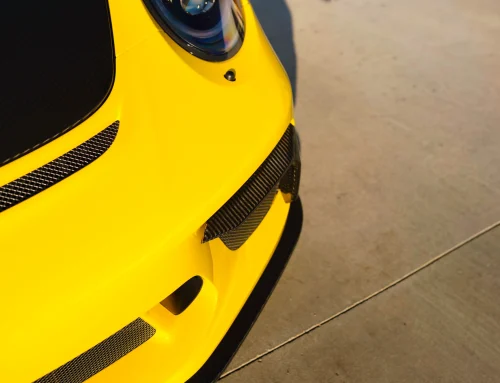
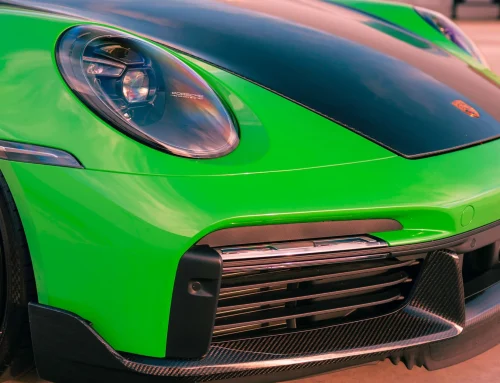
The Speedster’s front fascia is prone to road rash and scuffing due to its low height. Replacing the factory black plastic front splitter with a Dry Carbon Front Spoiler (our part is bespoke) does more than just protect the underside; it grounds the car visually and mirrors the carbon construction of the fenders.
B. Sculpted Rocker Panels (Side Skirts)
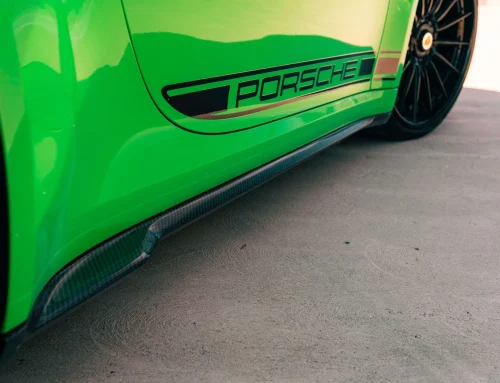
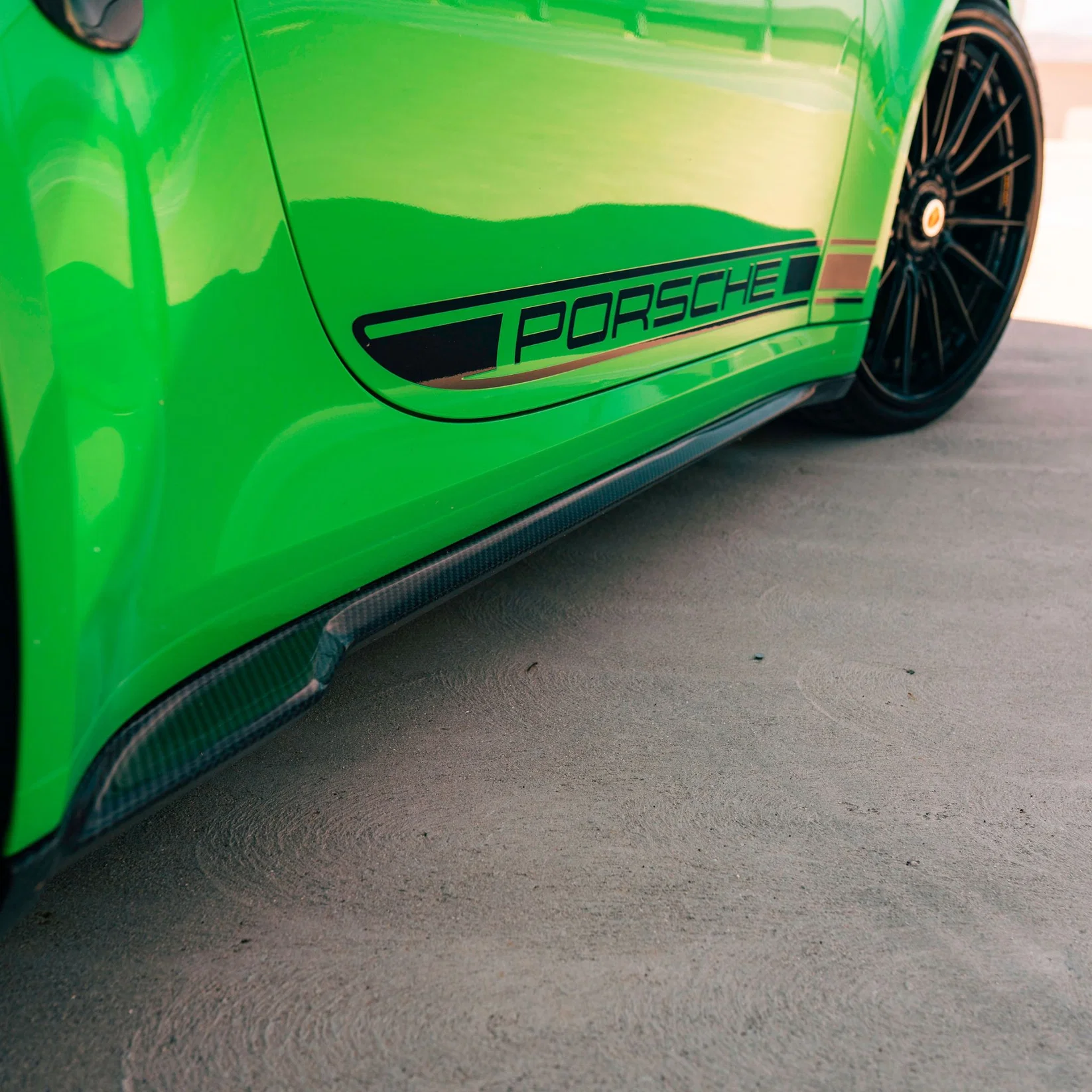
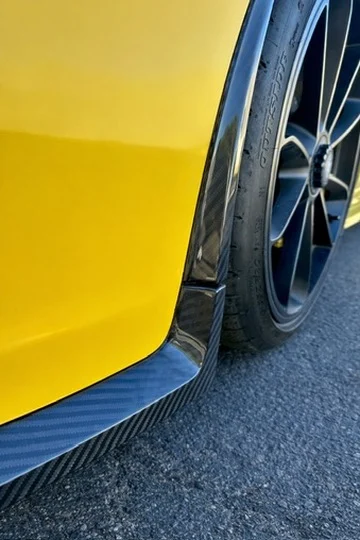
The 991 chassis has a beautiful “coke bottle” shape, but the lower side rockers are often left in a matte plastic finish. A set of 6K Twill Carbon Rockers provides a visual bridge between the front aero and the rear diffuser, creating a full-surround carbon package that feels complete.
C. The 4.0L Engine Theater
When you lift that massive carbon fiber rear decklid, you want the engine to match the exterior’s drama. Replacing the plastic engine shrouds with Bespoke Carbon Engine Covers turns the 4.0L flat-six into a centerpiece. For the collector, this is the jewelry that makes the car stand out at a Cars & Coffee or a Concours event.
Balancing the Aero-Axis
The Speedster relies on underbody aero rather than a massive GT3 wing. When you upgrade to an OG Carbon Front Spoiler, you are slightly shifting the front-end downforce. To maintain the factory “balance,” we recommend pairing the front aero with our Carbon Side Rockers. This streamlines the lateral airflow, reducing turbulence before it hits the rear diffuser — ensuring the car remains planted at high speeds exactly as the Weissach engineers intended.
The 991.2 Speedster as an Investment Asset
The market for the 991.2 Speedster is incredibly healthy. While many modern supercars depreciate the moment they leave the showroom, the Speedster is trading well above its original MSRP.
Guarding Against “Mod-Depreciation”
In the collector world, “mod-depreciation” occurs when an owner adds low-quality parts that scare off future buyers. By adhering to the OG Carbon Standard of excellence, you are doing the opposite.
You are adding high-grade, reversible components that signal a high level of care. Future buyers aren’t just buying the car; they are buying the “ownership history.” A car that has been meticulously refined with dry carbon and kept in reversible condition is often more desirable than a neglected “stock” example.

The Installation Masterclass: Engineering Trust
A major barrier to refinement for the high-net-worth individual is the fear of poor workmanship. This is where the OG Carbon President Scott Krawczyk’s philosophy of repeatable excellence is vital.
Every Speedster component we develop begins with a high-resolution 3D scan of an actual 991.2 chassis. We don’t use molds taken from other parts; we use the digital twin of the car itself. This ensures that every clip, tab, and screw hole aligns perfectly with the factory mounting points. When you install an OG Carbon part on a $500k Speedster, you aren’t “making it fit” — it simply is the right fit.
Frequently Asked Questions for the Speedster Collector
Can I ceramic coat my carbon fiber parts? A: Absolutely. In fact, we recommend it. A high-quality ceramic coating adds another layer of UV protection and makes the carbon easier to clean after a drive.
Will these parts fit the 991.2 GT3 Touring as well? A: Many components are cross-compatible between the Speedster and the GT3 Touring due to the shared chassis. However, specific rear aero and interior trim pieces are unique to the Speedster’s “Double-Bubble” configuration.
Does OG Carbon offer bespoke weave patterns? A: While we prioritize the factory-match 3K Twill, we do offer custom commissions for owners looking for a more aggressive 6K Twill or V-weave, provided it fits the owner’s vision for their collection.
Stewardship and the Art of Refining a Legacy
The Porsche 911 Speedster is a gift to the automotive world — a celebration of everything the brand has learned since 1948. Owning one is a privilege, but refining one is a delicate art form.
As we look toward the future of the 911, the 991.2 Speedster remains a high-water mark for analog driving. It is a car that demands respect, both on the road and in the garage. At OG Carbon, we are proud to offer the level of craftsmanship and technical discipline required to stand alongside this legend. We invite Speedster owners to explore a world where carbon fiber isn’t just a modification, but a continuation of the Porsche story.
Consult with the Specialists
Are you looking to elevate your Speedster with precision-fit, autoclave-cured carbon fiber?
Contact the experts at OG Carbon to discuss bespoke commissions and current availability for the 991.2 platform. We specialize in the “invisible upgrade” — refinements so perfect, they look like they were always there.
OG Carbon prides itself on uncompromising excellence for discerning Porsche owners – because our drivers know the difference. Check out the OG Carbon 992 collection today.